Voltage Regulation Module Topologies Under Sustained Multi-Core Loads in Compact ITX Gaming Systems
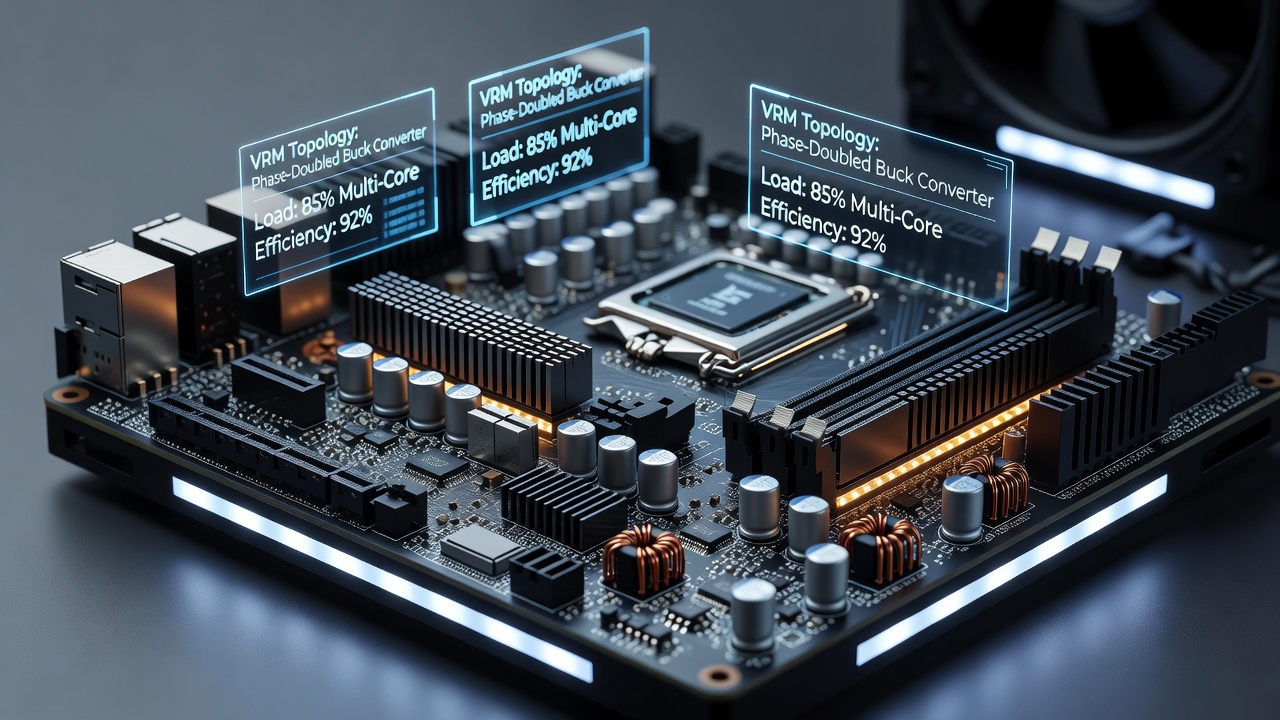
Compact ITX gaming systems place strict limits on space and airflow yet they must deliver stable power to processors running multiple cores at high utilization for extended periods, and voltage regulation modules handle this task through various topologies that balance efficiency, heat generation, and transient response.
Researchers have documented how multiphase buck converters remain the dominant approach in these builds because they distribute current across several phases which reduces ripple and allows finer control during sustained loads from applications such as real-time rendering or large-scale simulations, while single-phase designs still appear in entry-level boards where cost and board area take priority over peak performance.
Topologies and Their Behavior Under Load
Multiphase interleaved buck topologies operate by staggering switching events across phases so that output capacitance requirements drop and efficiency stays higher when current demand remains elevated for minutes or hours, and data from motherboard teardowns in 2025 showed that boards using six or eight phases maintained voltage within tighter tolerances than four-phase alternatives when paired with 12-core or 16-core CPUs.
Direct conversion topologies have gained attention in recent board designs because they reduce the number of conversion stages between the power supply unit and the CPU which cuts intermediate losses, yet observers note that thermal density rises quickly in the confined ITX footprint when these stages run continuously under multi-core workloads.
Thermal and Spatial Constraints
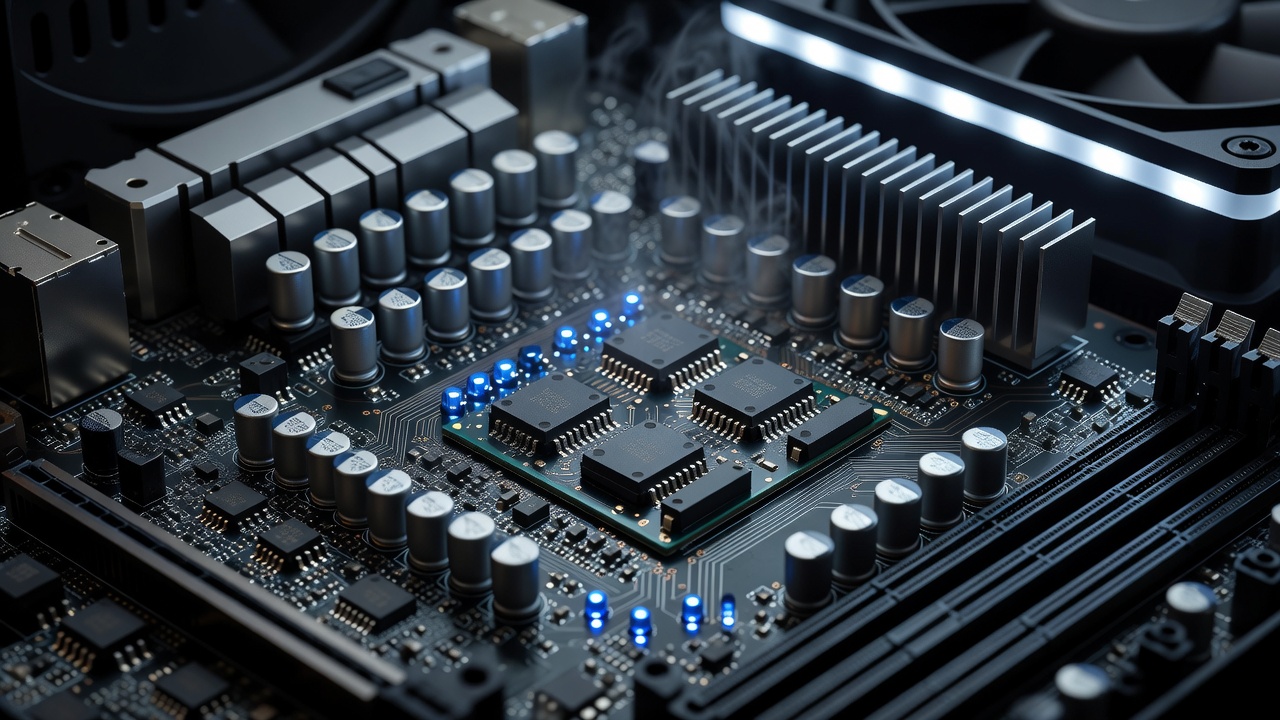
ITX chassis limit heatsink volume and fan placement so VRM heat sinks often share airflow with the CPU cooler or rely on chassis exhaust paths, and studies presented at industry events in June 2026 highlighted that sustained loads above 80 percent CPU utilization can push MOSFET temperatures past 90 degrees Celsius in poorly ventilated cases unless phase count and inductor quality are matched to the expected power envelope.
Power stage components such as DrMOS packages integrate high-side and low-side switches with drivers which shrinks board space while improving switching efficiency, and manufacturers have adopted these packages widely in 2026 ITX boards to maintain regulation without oversized cooling solutions.
Performance Impact and Measurement
Voltage droop during sudden core activation can trigger throttling if the VRM cannot recover quickly enough, and telemetry logs from compact systems running Cinebench multi-core tests for 30 minutes or longer reveal that boards with stronger phase designs sustain higher average clock speeds compared with minimal topologies, according to IEEE conference proceedings on power delivery networks.
Load-line calibration settings further shape behavior because they adjust the voltage target based on current draw, and system integrators tune these parameters differently across topologies to keep temperatures and power draw within chassis limits while preserving stability during long sessions.
Developments Observed in 2026
Board vendors introduced hybrid topologies that combine traditional buck stages with switched-capacitor assistance in select ITX models released mid-year, and early adoption data indicates these hybrids reduce peak inductor temperatures by several degrees during sustained multi-core operation without increasing board thickness.
Power delivery traces on high-density ITX layouts incorporate additional copper layers and shorter paths to lower resistance, and measurements shared by European research groups show measurable reductions in voltage sag when these routing practices pair with eight-phase controllers under continuous loads.
Conclusion
ITX gaming systems continue to rely on refined VRM topologies to support sustained multi-core performance within tight physical boundaries, and ongoing component and layout improvements documented through 2026 demonstrate measurable gains in efficiency and thermal headroom when phase count, power stage selection, and trace design align with workload demands.