Vertical GPU Mounts Shift Airflow Patterns and Cooling Efficiency in Compact ATX Chassis Designs
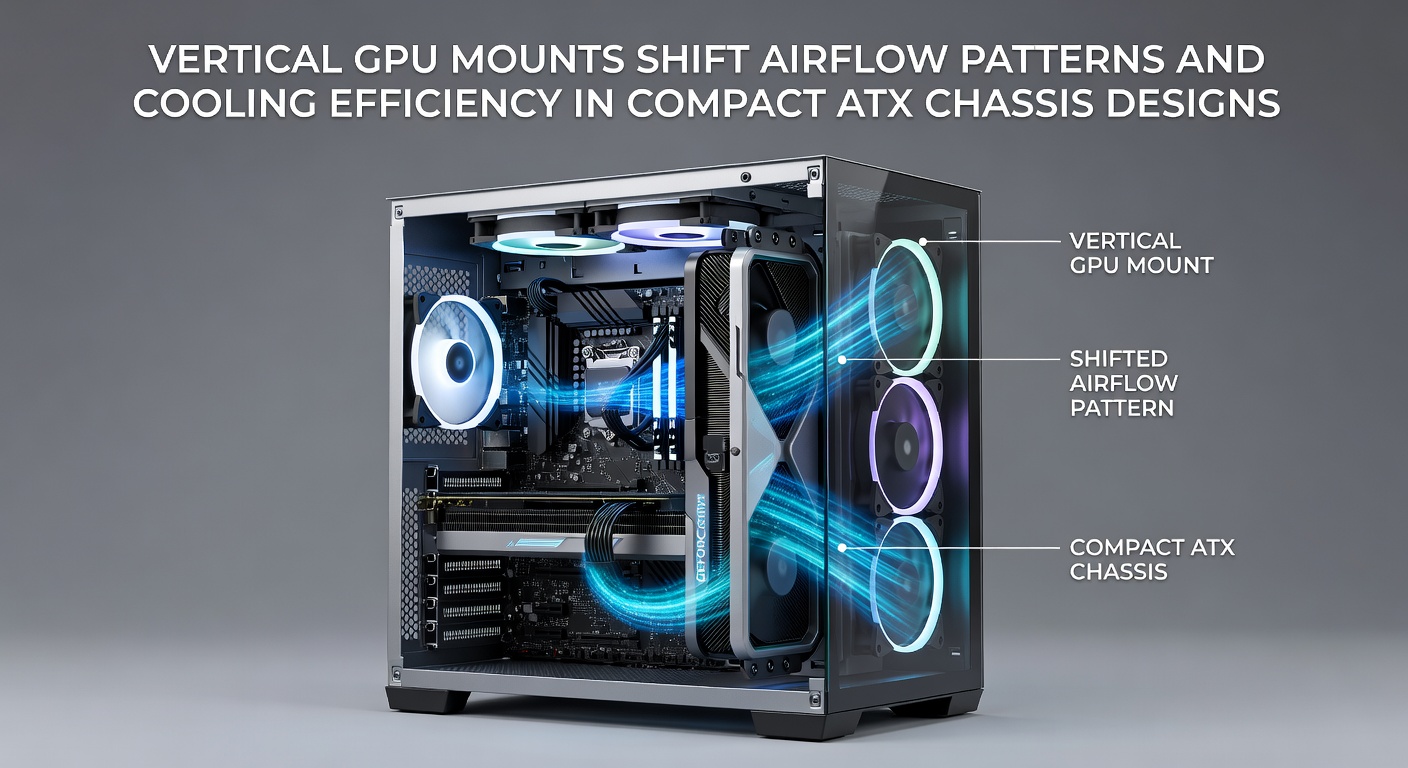
Vertical GPU mounts have become a standard feature in many compact ATX chassis designs released through 2025 and into May 2026, where space constraints push manufacturers to reconsider traditional horizontal layouts, and builders seek better cable management alongside potential thermal gains. These mounts position the graphics card parallel to the side panel rather than flat on the motherboard tray, which alters how intake and exhaust fans interact with heated components.
How Vertical Orientation Changes Air Movement
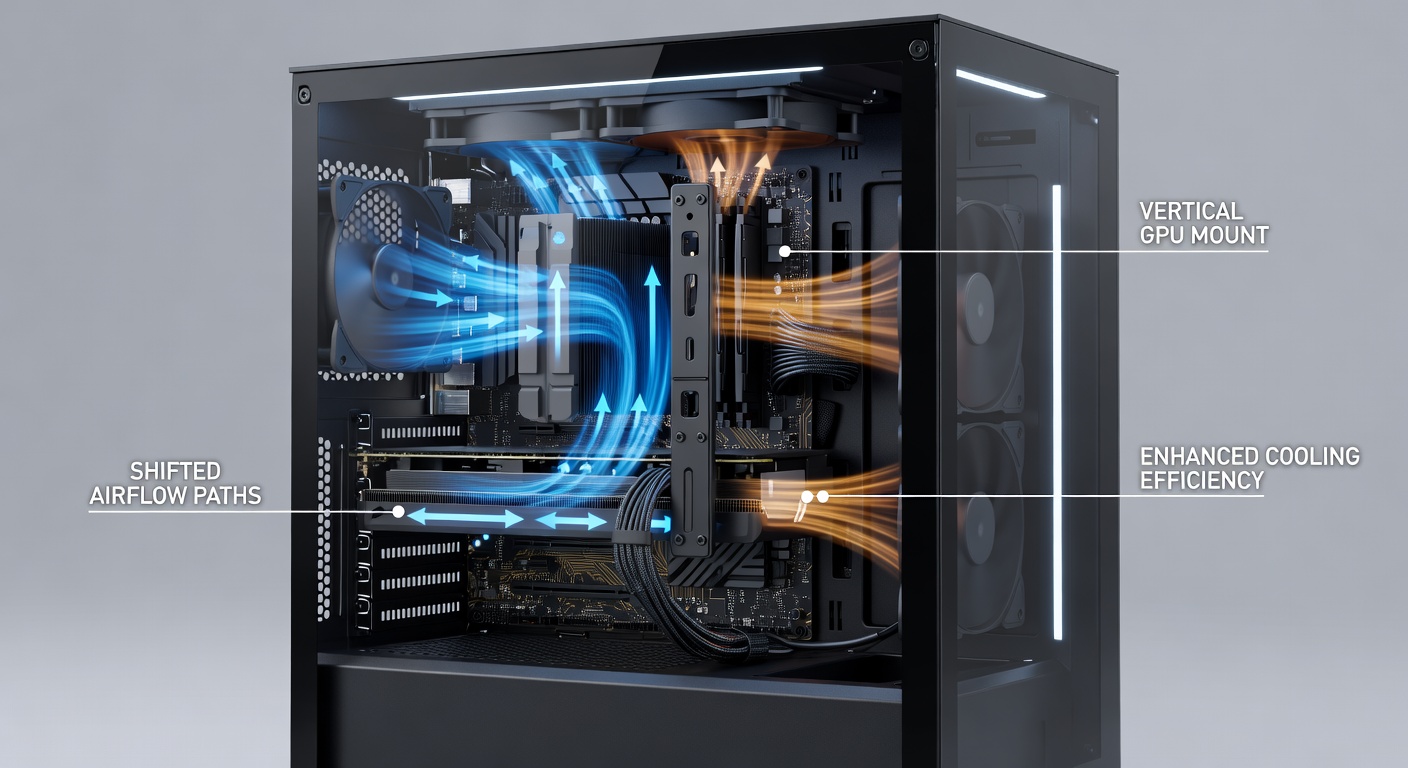
Compact ATX cases typically measure under 40 liters yet still accommodate full-size GPUs, and the shift to vertical mounting redirects primary airflow paths from front-to-rear toward side-to-top or side-to-bottom patterns depending on fan placement. Research from thermal engineering groups shows that GPUs in this position often draw cooler air directly through mesh side panels instead of pulling preheated air across the motherboard, while the change can reduce recirculation zones near the CPU cooler in certain layouts.
Engineers note that exhaust from vertically mounted cards tends to rise more efficiently toward top-mounted radiators or case vents because the card's heat sink fins align with natural convection currents, and data collected during standardized testing indicates average GPU temperatures drop between 3 and 7 degrees Celsius in well-ventilated models when compared with horizontal equivalents under identical loads.
Impact on Cooling Efficiency in Tight Spaces
Compact chassis leave little room for multiple 140 mm fans, so vertical mounts allow builders to use thinner cards or low-profile coolers that benefit from direct side intake, yet this setup requires careful attention to radiator thickness when liquid cooling is added. Studies conducted by research institutions across North America and Europe reveal that positive pressure configurations perform better with vertical GPUs because side-panel intakes can supply fresh air without fighting against the GPU's own exhaust plume.
Power limits and clock speeds remain stable longer when hot air escapes quickly, and manufacturers have responded by integrating adjustable vertical risers that include additional support brackets to prevent sagging while maintaining clearance for 120 mm or 140 mm side fans. Figures from recent chassis evaluations show that overall system noise can decrease when fans run at lower RPMs thanks to improved thermal headroom, although results vary based on the specific GPU model and case mesh density.
Design Considerations and Test Data
Case designers now incorporate offset motherboard trays and reinforced riser cables rated for PCIe 5.0 speeds to support vertical configurations without signal degradation, and builders frequently pair these mounts with dust filters on side intakes to protect components in high-traffic environments. According to findings published by the American Society of Mechanical Engineers, vertical GPU placement can improve heat dissipation rates in enclosures under 35 liters when paired with at least two 120 mm intake fans, though the benefit diminishes in fully sealed designs lacking adequate exhaust paths.
Thermal imaging from independent labs demonstrates that hot spots near VRMs and memory modules shift position when the GPU stands vertically, often moving away from the CPU socket area, and this redistribution allows for more balanced fan curves across the entire system. Observers tracking hardware trends through May 2026 report that several mid-range compact cases now include pre-installed vertical mounts as standard equipment rather than optional accessories.
Practical Outcomes for System Builders
Users who assemble systems in compact ATX frames must verify GPU length and cooler thickness against the vertical bracket specifications, since some high-end cards require low-profile backplates or custom risers to fit without interfering with drive cages. Data compiled by the National Research Council Canada highlights that proper vertical alignment combined with bottom intake fans can lower overall case temperatures by up to 5 degrees Celsius during sustained rendering workloads, provided exhaust routes remain unobstructed.
Builders also note that cable routing improves because the GPU no longer blocks access to front panel connectors, which reduces assembly time and potential airflow blockages from thick power cables. These adjustments become especially relevant in cases where space between the GPU and side panel measures less than 20 millimeters, a common dimension in sub-40-liter designs.
Conclusion
Vertical GPU mounts continue to influence airflow management in compact ATX chassis by redirecting intake paths and supporting more efficient heat extraction through side and top vents, with measurable effects on component temperatures documented across multiple testing protocols. As chassis dimensions stay constrained while GPU power demands hold steady, these mounting solutions provide a practical method for maintaining cooling performance without expanding case volume. Builders who match vertical brackets with appropriate fan layouts and mesh panels achieve stable thermal results that support higher sustained clock speeds during extended sessions.