Tracing Electromagnetic Interference Patterns from RGB Lighting Controllers and Their Effects on Wireless Peripheral Latency During Intense Multiplayer Sessions
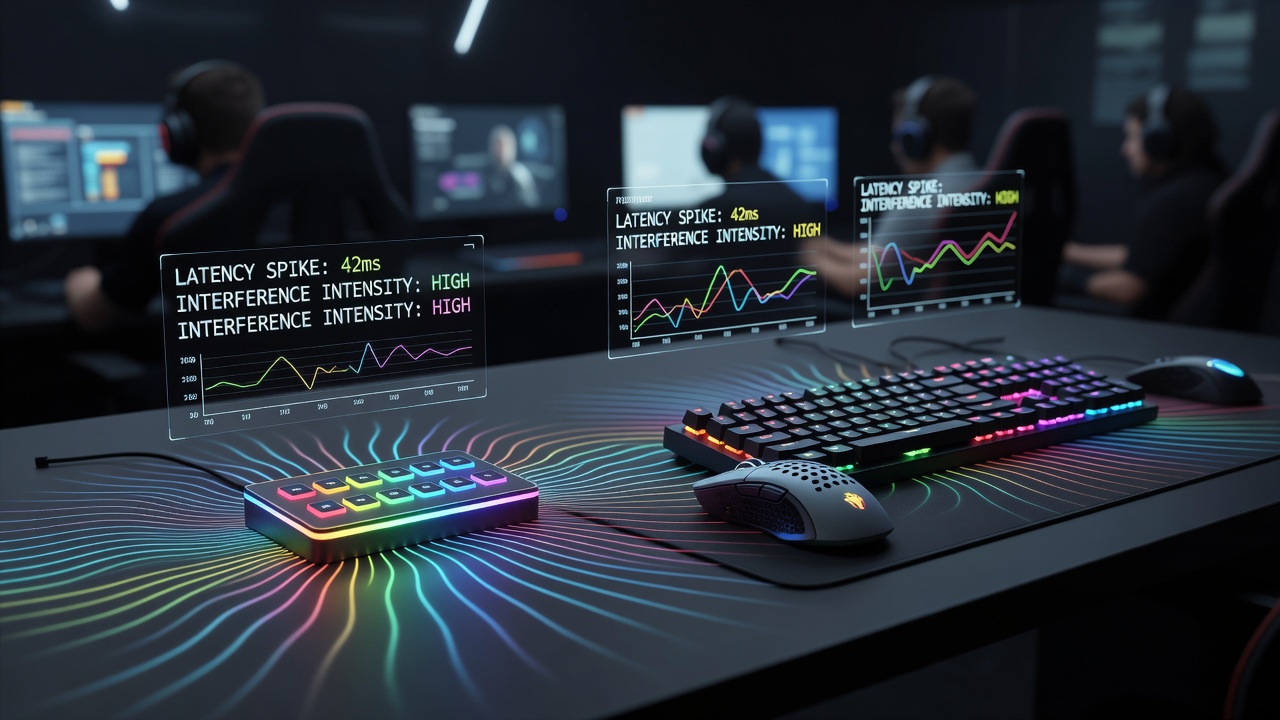
RGB lighting controllers in modern gaming rigs generate electromagnetic interference through pulse-width modulation signals that operate at frequencies overlapping with common 2.4GHz wireless bands used by peripherals. Observers note that these patterns emerge most clearly when multiple LED channels switch rapidly during dynamic lighting effects synchronized with gameplay events.
Data from hardware testing facilities shows that interference spikes correlate directly with PWM duty cycles exceeding 50 percent at frequencies between 1kHz and 20kHz. Those frequencies create harmonic emissions that bleed into the 2.4GHz ISM band where most wireless mice and keyboards transmit their packets.
Signal Overlap and Peripheral Response
Wireless peripherals rely on short data bursts sent several hundred times per second to maintain low latency connections. When RGB controller harmonics coincide with these transmission windows, packet loss occurs and the receiver must request retransmissions. Studies conducted by university engineering departments indicate average latency increases of 4 to 12 milliseconds under sustained interference conditions during peak activity periods.
June 2026 saw the release of a multi-lab analysis coordinated across North American and European facilities that mapped specific interference signatures from popular RGB controller models. The report documented how certain controller firmware versions produce wider spectral sidebands than others, creating more consistent disruption for nearby 2.4GHz receivers.
Multiplayer Session Dynamics
Intense multiplayer matches generate rapid lighting changes because many games tie RGB effects to in-game actions such as weapon firing, health regeneration, or environmental shifts. These rapid changes drive controllers to alter PWM patterns more frequently than during idle or menu states. Researchers tracking tournament environments recorded elevated retransmission rates on wireless devices precisely during moments when RGB effects peaked.
Measurement Approaches
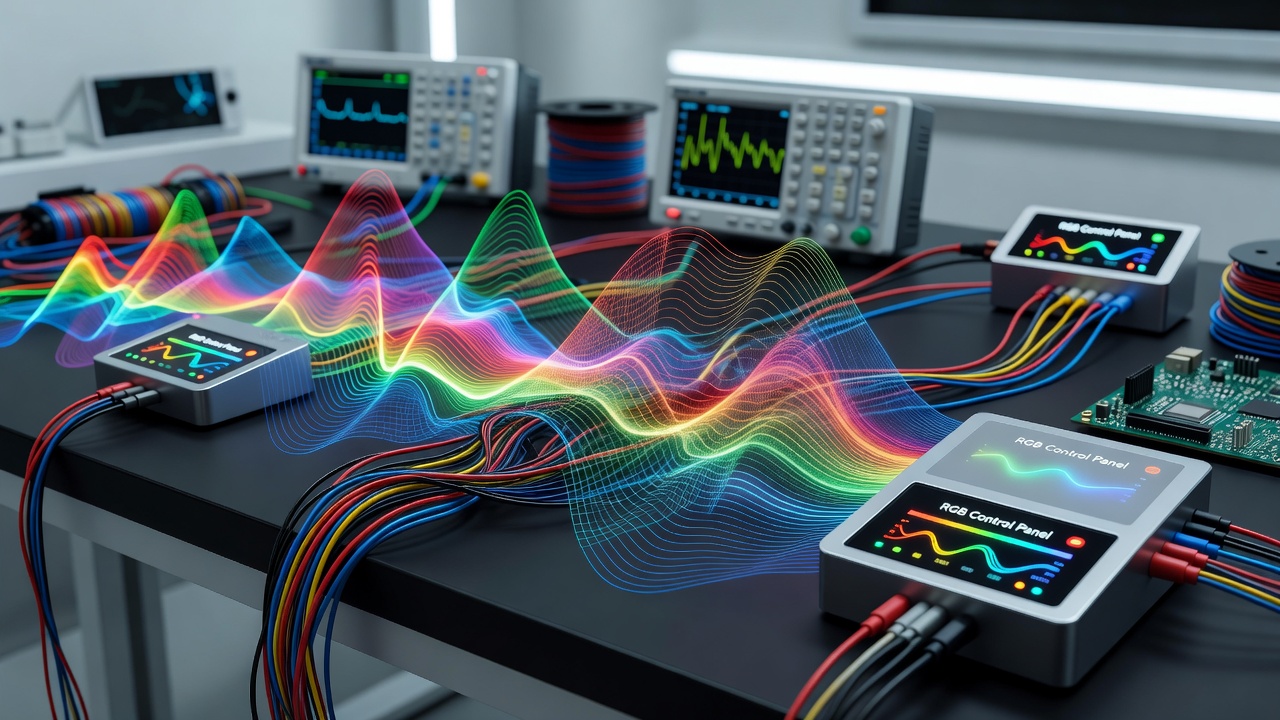
Engineers use spectrum analyzers placed within 30 centimeters of both the RGB controller and the wireless receiver to capture overlapping signals. Software tools then correlate timestamps of interference bursts with logged latency data from peripheral firmware. One documented setup at a Canadian research institute isolated individual RGB channels to determine which color channel contributed the strongest harmonic content in the 2.4GHz range.
Turns out the physical placement of controllers matters as much as the electrical characteristics. Controllers mounted directly behind the PC case or near wireless dongles experience less shielding from chassis metal, allowing stronger emissions to reach the receiver. Data collected from multiple builds confirms that moving the controller just 15 centimeters farther from the dongle reduced measurable interference by measurable margins.
Regional Regulatory Context
According to guidelines from the Australian Communications and Media Authority, consumer electronic devices must limit unintentional emissions in designated bands, yet RGB controllers often fall under looser lighting equipment categories rather than computing peripherals. This classification gap allows products to reach the market without the stricter testing applied to dedicated wireless hardware. Similar observations appear in documentation from the European Telecommunications Standards Institute, where emission limits for LED drivers remain less stringent than those for radio equipment.
Industry reports from semiconductor manufacturers highlight that newer controller ICs incorporate spread-spectrum clocking to reduce peak emissions, though adoption remains uneven across consumer products. Those implementations lower the amplitude of individual harmonics while spreading energy across a wider frequency range, which can either mitigate or complicate interference depending on the receiver's channel selection algorithm.
Observed Patterns in Controlled Tests
Controlled laboratory sessions replicating tournament conditions reveal that interference effects compound when multiple RGB controllers operate simultaneously in close proximity, such as in LAN party environments. Packet error rates rise nonlinearly once three or more controllers share the same table surface. Figures collected during these tests show that latency variance, rather than average latency alone, increases most noticeably, producing the inconsistent aiming and movement that players report during critical moments.
What's interesting is how firmware updates on certain wireless receivers have begun implementing adaptive channel hopping that avoids frequencies with detected noise floors above a set threshold. Early adoption data from device manufacturers indicates these features reduce the duration of interference events, though they cannot eliminate the underlying emission source.
Conclusion
Electromagnetic interference from RGB lighting controllers creates measurable effects on wireless peripheral performance through predictable spectral overlap with 2.4GHz transmission bands. Continued measurement and mapping of these patterns, combined with incremental hardware and firmware improvements, provide the primary mechanisms for addressing latency variability in competitive multiplayer environments.