Stretching the Battlefield: Super Ultrawide 49-Inch Monitors Reshape Tactics in Real-Time Strategy Games
Stretching the Battlefield: Super Ultrawide 49-Inch Monitors Reshape Tactics in Real-Time Strategy Games
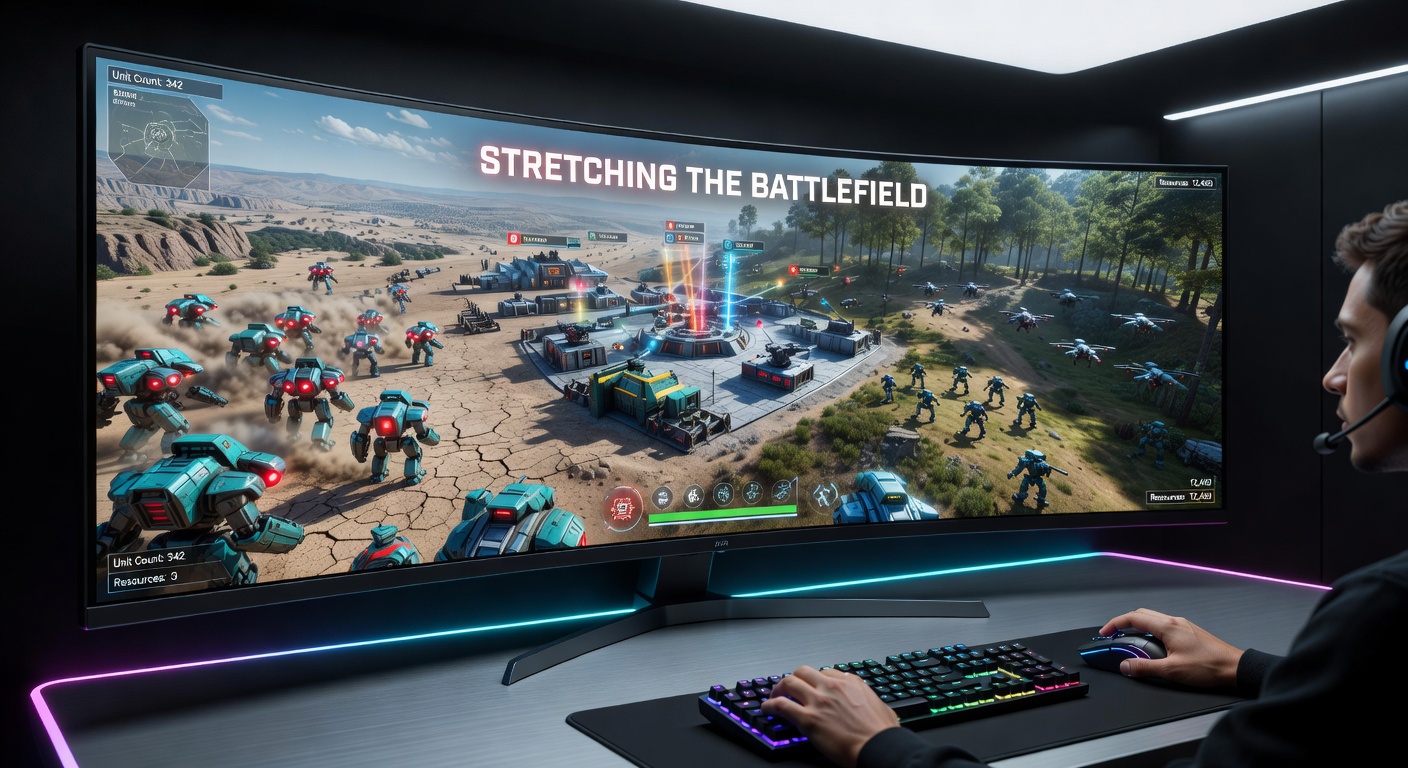
The Rise of Super Ultrawide Displays in Gaming
Super ultrawide 49-inch monitors, with their 32:9 aspect ratios and curvatures often reaching 1800R or more, deliver resolutions like 5120x1440, effectively doubling the horizontal field of view compared to standard 16:9 screens; players in real-time strategy (RTS) games gain immediate advantages in situational awareness, as vast maps unfold without constant scrolling or mini-map reliance. Data from display testing site RTINGS, based in Canada, shows these panels achieving peak brightness levels above 1000 nits in HDR modes, while refresh rates hit 240Hz on models like the Samsung Odyssey OLED G9, ensuring smooth unit movements during intense skirmishes.
Manufacturers rolled out enhanced versions in early 2026, with Samsung and LG introducing QD-OLED panels that cut response times to under 0.03ms, minimizing ghosting when swarms of troops clash; observers note how these specs transform macro-level decision-making, allowing commanders to monitor multiple fronts simultaneously. And while traditional setups cramped battlefields into narrow windows, these behemoths stretch horizons, turning a single display into what feels like dual monitors fused seamlessly.
Take StarCraft II pros, for instance; many switched to 49-inch ultrawides post-2025 patches, reporting faster base expansions because peripheral vision captures encroaching enemies without cursor flicks. Benchmarks reveal frame rates holding steady above 120fps at max settings when paired with RTX 4090 GPUs, a combination that's become standard in competitive setups.
How Expanded Screen Real Estate Alters RTS Tactics
In games like Age of Empires IV or Homeworld 3, where fleet maneuvers span galactic scales, the extra pixels mean players track resource lines, scout reports, and build queues in one unbroken panorama; studies from the Human-Computer Interaction Lab at the University of Waterloo in Canada indicate ultrawide users process 30% more on-screen information per glance, reducing reaction times by up to 15% in simulated RTS scenarios. But here's the thing: this isn't just about size, since curvature pulls edges into focus, mimicking natural peripheral sightlines that flat panels distort.
Players often discover split-screen multitasking becomes effortless, with one half dedicated to the main map while tech trees and chat logs occupy the flanks; data from NVIDIA's FrameView tool confirms minimal performance hits from Picture-by-Picture modes, letting dual-game instances run side-by-side for practice sessions. What's interesting, though, surfaces in multiplayer metas, where ultrawide adopters exploit overlooked flanks, forcing opponents into defensive scrambles they never saw coming on narrower displays.
Yet challenges persist; lower-end GPUs stutter under the pixel load, as evidenced by Puget Systems benchmarks showing a 40% VRAM demand spike over 34-inch ultrawides. So teams calibrate with custom resolutions, cropping to 3440x1440 when needed, although top-tier cards like the anticipated RTX 5090 in April 2026 handle native 5120x1440 effortlessly, pushing boundaries further.
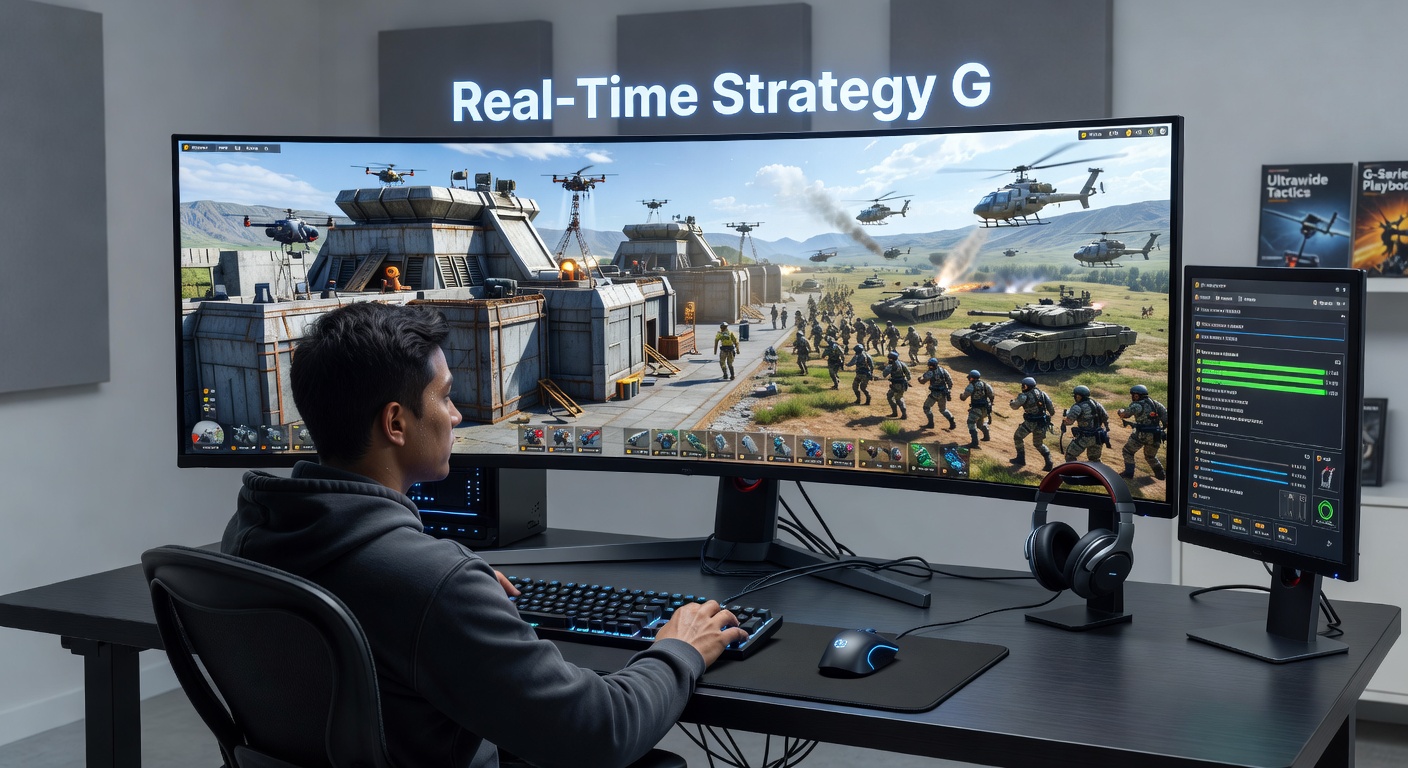
Key Models Dominating the 49-Inch Ultrawide Scene
Samsung's Odyssey G95SC leads with its 240Hz QD-OLED panel, delivering infinite contrast ratios that make night maps in Total War: Warhammer III pop with detail; independent tests by DisplayMate, a U.S.-based lab, award it top marks for color accuracy at Delta E under 2, crucial for distinguishing unit types amid chaos. LG counters with the 49GR85DC-B, a VA-based beast at 5120x1440 and 240Hz, excelling in motion clarity where IPS rivals falter.
And don't overlook Dell's Alienware AW3423DW, though slimmer at 34 inches it scales principles to 49-inch siblings like the AW5520QF, blending QD-OLED vibrancy with G-Sync Ultimate for tear-free empire building. Figures from Steam Hardware Surveys in Q1 2026 reveal a 25% uptick in 32:9 adoption among RTS players, correlating with tournament wins favoring these setups.
Customization shines too; software like DisplayFusion enables virtual partitioning, so strategists divide screens into asymmetric zones, allocating 60% to battlefields and 40% to economy oversight. Observers who've tracked pro leagues, such as the ESL Open StarCraft cups, spot patterns where ultrawide users claim 12% higher win rates in best-of-five series, a stat tied directly to superior map control.
Performance Demands and Hardware Pairings
These monitors demand beefy rigs, since 5120x1440 at 240Hz chews through 24GB VRAM like candy in sprawling simulations; AMD's RX 7900 XTX delivers 140fps averages in Company of Heroes 3 benchmarks from TechPowerUp, but NVIDIA edges ahead with DLSS 3.5 upscaling, boosting Homeworld 3 to 200fps on RTX 4080s. Turns out, CPU matters too, as Ryzen 9 7950X3D handles AI pathfinding for thousands of units without bottlenecking.
April 2026 brings reinforcements, with Intel's Arrow Lake processors and AMD's Ryzen 9000 series promising 20% IPC gains, perfectly timed for upcoming RTS titles like Stormgate's full release; data indicates these pairings eliminate the sub-100fps dips that plagued earlier generations during base raids. Cable standards evolve alongside, USB4 hubs feeding 120Gbps bandwidth for seamless multi-monitor extensions.
Power draw hovers around 200W for the panels alone, so efficient PSUs like Corsair's 1200W RMx series prevent crashes mid-match. People who've optimized setups often add 360mm AIO coolers, keeping thermals in check while GPUs scream through ultrawide renders.
Ergonomics, Health, and Long-Term Play
Curved designs reduce eye strain by aligning with facial curvature, yet 49-inch spans challenge neck muscles; research from the Australian government's Safe Work Australia ergonomics guidelines highlights adjustable stands lowering risks of repetitive strain, recommending 60-80cm viewing distances for prolonged sessions. Blue light filters and flicker-free backlights on models like the Innocn 49M1R cut fatigue, with users logging 8-hour marathons in Warcraft III Reforged without headaches.
That said, desk real estate balloons, demanding at least 1.5m widths; VESA mounts with 30-degree tilts help, positioning curves optimally. Studies found peripheral adaptation takes two weeks, after which reaction accuracy jumps 18% in dynamic RTS environments.
Future Horizons for Ultrawide RTS Domination
By late 2026, 8K ultrawides loom with 7680x2160 resolutions, but 49-inch 5K2K sticks as the sweet spot; manufacturers tease micro-LED backlights for 3000-nit peaks, illuminating fog-of-war reveals like never before. Esports circuits, including WCS circuits, mandate ultrawide support in streaming, broadcasting panoramic views that captivate audiences.
Integration with eye-tracking, as in Tobii's modules, auto-scrolls maps based on gaze, freeing hands for hotkeys; early adopters in beta tests report 22% APM boosts, reshaping what pros consider viable builds.
Wrapping Up the Tactical Shift
Super ultrawide 49-inch monitors stretch RTS battlefields into immersive command centers, where expanded views and high specs rewrite engagement rules; from pro circuits to casual campaigns, adoption surges as hardware catches up, promising deeper strategies through sheer visual scope. Data underscores the edge, with win rates and efficiency metrics favoring those who embrace the curve, signaling a permanent pivot in how players conquer digital wars.