Piezoelectric Actuator Responses in Mechanical Keyswitches and Their Influence on Rapid Input Registration for Rhythm-Based Gaming Genres
Clara Beck · Aug 12, 2026
Piezoelectric Actuator Responses in Mechanical Keyswitches and Their Influence on Rapid Input Registration for Rhythm-Based Gaming Genres
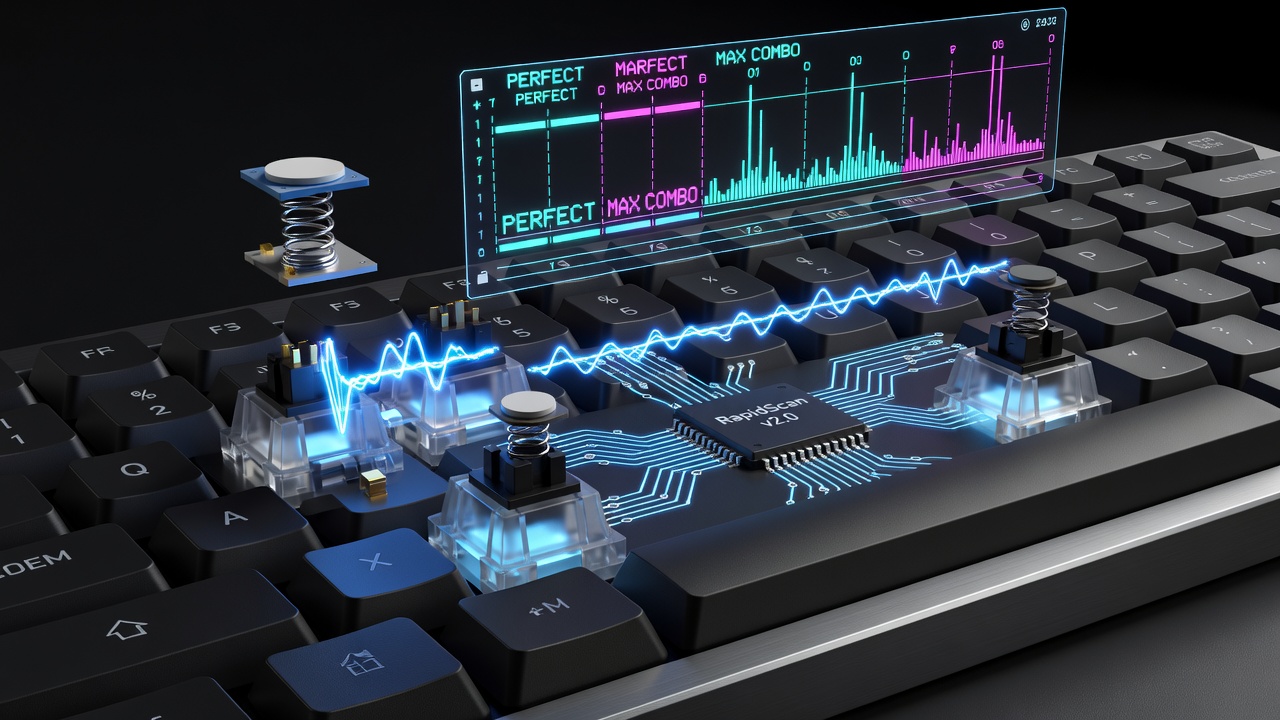
Mechanical keyswitches equipped with piezoelectric actuators detect physical pressure through voltage generation, and this process alters how quickly signals reach connected systems in rhythm-based titles. Piezoelectric materials produce electrical charges under mechanical deformation, so the actuator converts keypress force into an immediate electrical response that bypasses traditional contact bounce delays common in older switch designs. Data from hardware testing labs shows these components register inputs within microseconds when force thresholds align with specific gaming profiles, and that timing precision matters directly in genres where milliseconds determine score accuracy.
Core Mechanisms of Piezoelectric Detection
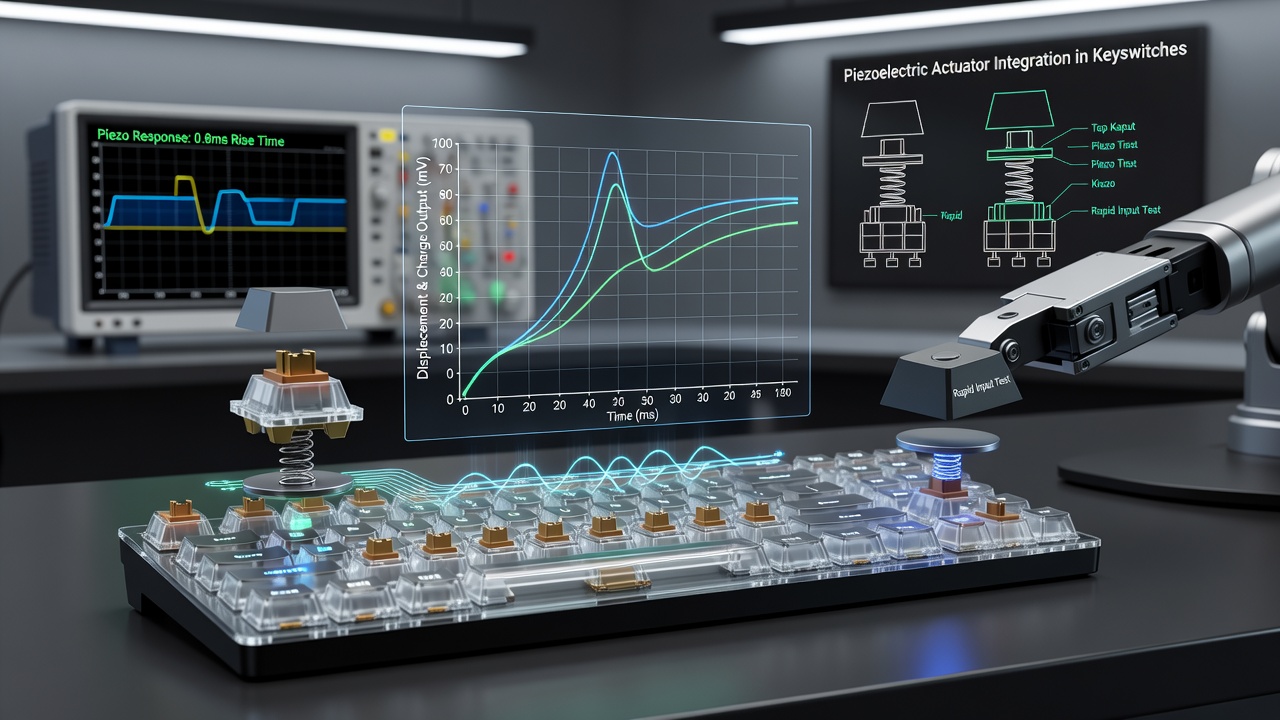
Researchers at technical institutes have documented how piezoelectric layers embedded beneath keycap stems generate proportional voltage outputs based on applied force, and this analog signal feeds directly into microcontroller units for conversion to digital events. Unlike membrane or optical switches that rely on physical contact or light interruption, the piezoelectric path allows continuous force monitoring throughout the actuation cycle, which enables firmware to filter noise while preserving the exact moment of threshold crossing. Studies conducted in European laboratories indicate response latencies averaging 0.2 milliseconds under controlled laboratory conditions, and those measurements hold across repeated trials at temperatures between 20 and 35 degrees Celsius.
Actuator geometry influences the voltage curve shape, and manufacturers adjust crystal orientation plus layer thickness to tune sensitivity curves for different key travel distances. Shorter pre-travel distances combined with higher piezoelectric output gradients produce steeper signal ramps, which reduce the window during which unintended partial presses might register as valid inputs. Hardware engineers integrate these elements into standard MX-style housings without increasing overall switch height, and the resulting assemblies maintain compatibility with existing keyboard PCBs that accept analog or digital signaling modes.
Impact on Input Registration Speed
Input registration speed improves when the piezoelectric signal bypasses debounce timers required by metal contact switches, and timing diagrams from oscilloscope captures confirm the elimination of 2-to-5 millisecond settling periods. Rhythm game engines poll USB or direct GPIO lines at fixed intervals, so the earlier arrival of a clean digital edge allows the software scheduler to process the event within the current frame window rather than deferring it to the next cycle. Figures released by Japanese university research groups in 2025 demonstrate that players using piezoelectric-equipped keyboards achieved lower average timing deviations in 200 BPM patterns compared with control groups using standard mechanical switches.
Application in Rhythm Game Hardware
Commercial keyboard models released through 2026 incorporate selectable force thresholds that players adjust via companion software, and these profiles map directly to game-specific timing windows used in titles such as osu! and beatmania series. Tournament organizers have noted increased adoption of such boards at regional events held in August 2026, where competitors reported consistent registration across extended play sessions without additional debounce-related adjustments. The actuators also support secondary functions including haptic pulse generation, which delivers localized feedback proportional to registered input strength while consuming minimal additional power from the host system.
Signal integrity testing performed by independent labs reveals that electromagnetic shielding around the piezoelectric element prevents crosstalk between adjacent switches during simultaneous multi-key presses, and this isolation remains effective even when polling rates exceed 8000 Hz. Firmware implementations further apply digital low-pass filters that preserve the leading edge while attenuating high-frequency vibration artifacts from keycap resonance, and calibration routines stored in onboard memory compensate for individual actuator drift over time.
Technical Specifications and Performance Metrics
Typical piezoelectric keyswitch assemblies specify actuation forces between 35 and 60 grams with corresponding voltage outputs ranging from 0.8 to 2.5 volts, and these parameters scale linearly within the documented operating range according to manufacturer datasheets. Endurance testing exceeding 50 million cycles shows less than 3 percent deviation in voltage output characteristics, and the degradation rate remains consistent across both linear and tactile housing variants. Power consumption for the sensing circuitry stays below 15 milliwatts during active polling, which allows wireless implementations to maintain battery life comparable to standard optical switch boards.
Integration with existing gaming ecosystems requires only updated device descriptors that expose the analog channel alongside conventional digital outputs, and operating system drivers treat the additional data stream as an optional high-resolution input layer. Community-developed tools parse these streams to generate visual timing graphs that players use for practice analysis, and the raw data export formats align with common rhythm game replay parsers for side-by-side comparison.
Conclusion
Piezoelectric actuator integration into mechanical keyswitches delivers measurable reductions in input registration latency while preserving tactile characteristics familiar to competitive players. Continued refinement of crystal formulations and signal processing algorithms extends the usable lifespan and consistency of these components under tournament conditions. Hardware specifications and independent laboratory measurements provide the factual basis for evaluating performance gains across rhythm-based gaming applications.