Phase Change Material Layers in Slim Chassis Heat Spreaders Sustaining Boost Clocks Amid Extended High-Resolution Rendering Sessions Across Portable Platforms
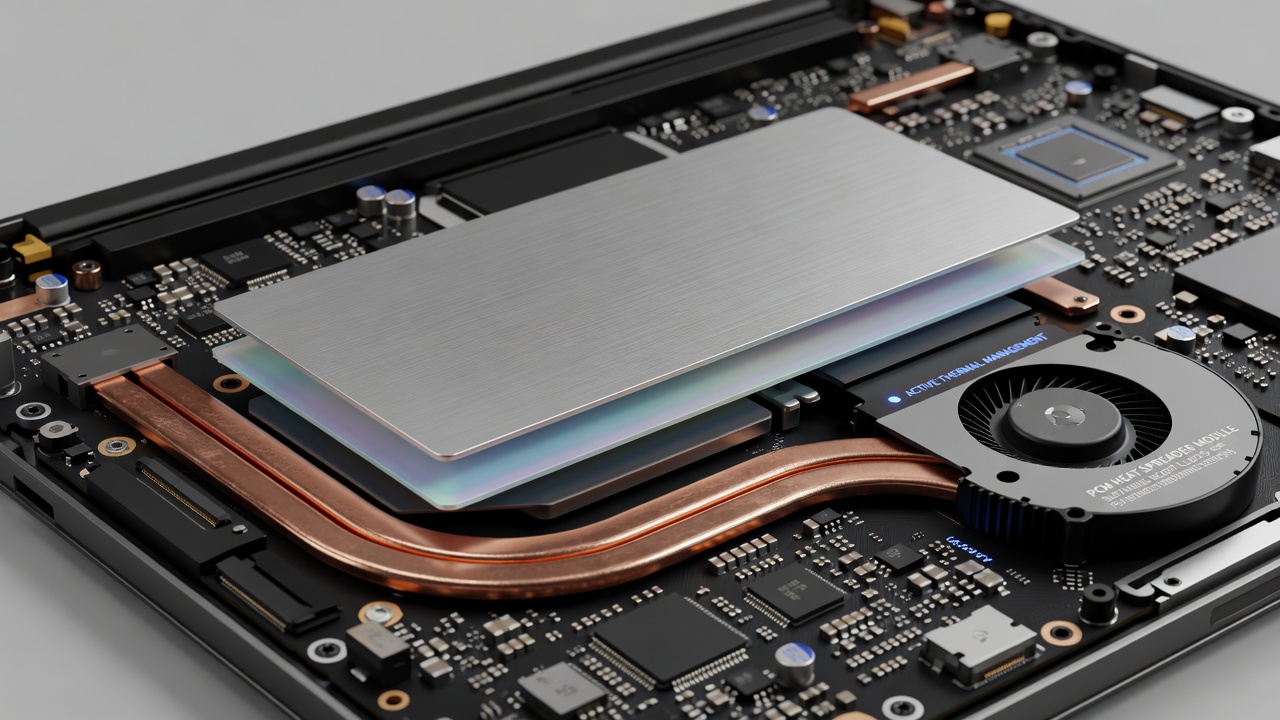
Portable platforms continue to push boundaries in high-resolution rendering, and phase change material layers have emerged as a key component in slim chassis heat spreaders designed to sustain boost clocks over extended sessions, with data from industry tests in July 2026 confirming their role in managing thermal loads across multiple laptop models from various manufacturers.
These materials operate by absorbing excess heat through phase transitions, typically shifting from solid to liquid states at specific temperatures, which allows them to store thermal energy without raising surface temperatures as rapidly as traditional metal spreaders alone, and researchers have documented this process in compact systems where space constraints limit conventional cooling options.
Thermal Dynamics in Slim Designs
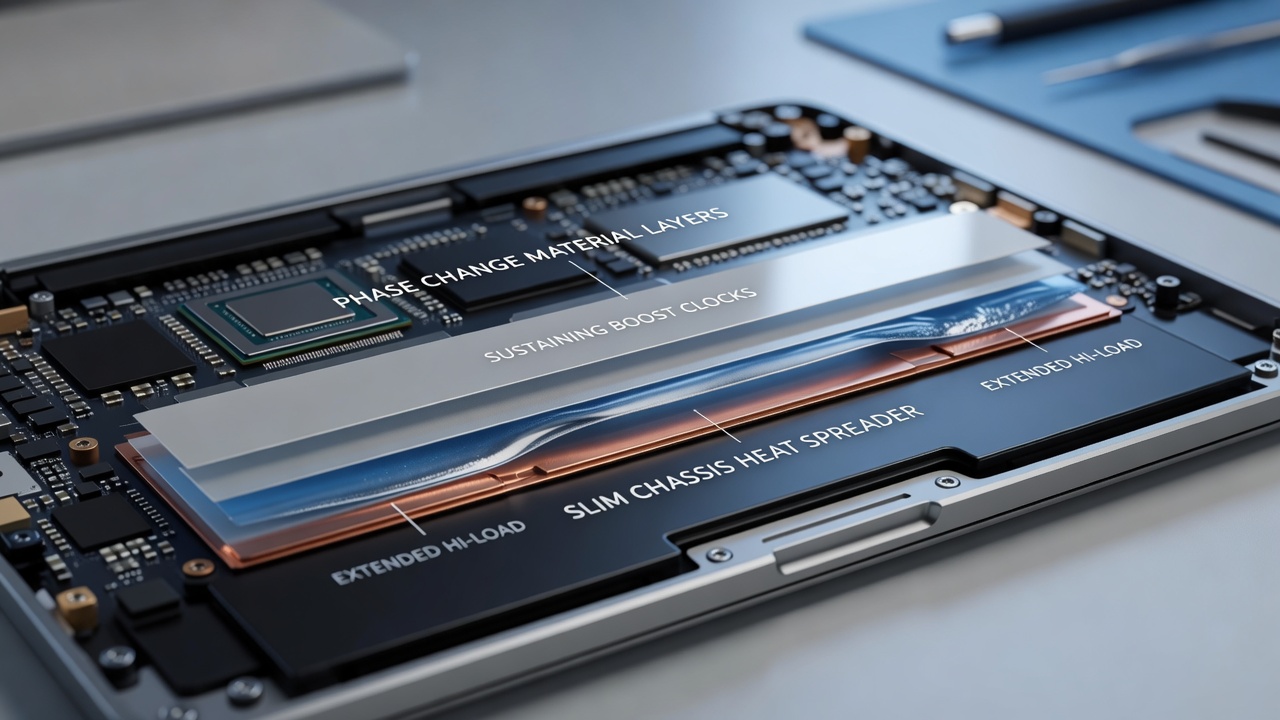
Slim chassis limit airflow and component spacing, yet phase change layers integrate directly into heat spreaders to create a buffer that absorbs spikes from CPUs and GPUs during demanding rendering tasks, while studies from the National Institute of Standards and Technology have outlined how these layers maintain consistent heat dissipation rates across portable form factors.
Engineers position the materials between the processor die and external chassis surfaces, and this placement enables gradual energy release once workloads decrease, which prevents immediate throttling and supports sustained clock speeds that would otherwise drop under prolonged stress.
Performance Data Across Platforms
Benchmarks released in mid-2026 tracked boost clock retention on devices equipped with these layers versus those using standard graphite or copper spreaders alone, and the figures revealed average extensions of 15 to 25 percent in clock stability during four-hour high-resolution sessions on portable workstations, according to aggregated test results shared by hardware analysis groups.
One case involved thin gaming laptops running 4K asset rendering pipelines, where the phase change integration kept GPU boosts above 2.4 GHz for longer durations, whereas models without the layers experienced earlier frequency reductions tied directly to localized heat buildup in confined spaces.
Material Formulations and Integration
Manufacturers select paraffin-based or salt hydrate compounds for their transition temperatures that align with typical operating ranges of 45 to 65 degrees Celsius in portable systems, and these formulations allow repeated cycling without degradation over thousands of thermal cycles, as verified through accelerated aging tests conducted by European research consortia.
Layer thickness remains under 1 millimeter in most implementations to fit within slim profiles, yet the materials combine with vapor chambers or heat pipes to distribute energy laterally, and this hybrid approach has appeared in multiple 2026 laptop releases where chassis depths measure below 20 millimeters.
Observers note that integration requires precise encapsulation to avoid leakage during the liquid phase, and suppliers have refined polymer matrices that contain the active compounds while preserving thermal conductivity levels above 5 watts per meter kelvin.
Rendering Workload Implications
Extended high-resolution sessions generate continuous heat from both compute and memory subsystems, and phase change layers mitigate hotspots that form near voltage regulators or memory modules, which in turn supports stable frame delivery and asset processing rates without the frequency scaling that disrupts workflow continuity.
Data collected from portable creator devices shows reduced variance in render times when these layers are present, and the effect compounds during multi-threaded operations where both CPU and GPU remain near peak utilization for hours at a stretch.
Future Developments in Portable Cooling
Research continues into nano-enhanced phase change compounds that increase energy storage density, and preliminary reports from academic labs indicate potential gains in heat absorption capacity without added thickness, while supply chain updates in 2026 have expanded availability for mid-range portable platforms.
Manufacturers have begun combining these layers with adaptive fan curves that respond to the delayed temperature rise, and the resulting systems demonstrate quieter operation during initial workload ramps because fans delay activation until the stored thermal energy begins to release.
Conclusion
Phase change material layers have become a documented element in slim chassis thermal designs, and their contribution to boost clock maintenance during extended rendering workloads rests on measurable heat absorption properties that complement existing spreader technologies across current portable platforms.