Load Time Legends: PCIe 5
PCIe 5.0 Emerges as the New Speed Standard
Developers finalized the PCIe 5.0 specification back in 2019, doubling the data rate to 32 gigatransfers per second per lane compared to PCIe 4.0's 16 GT/s, which means an x16 slot now handles up to 128 GB/s of bandwidth in each direction; that's a massive leap, and storage devices along with graphics cards have started tapping into it for real-world gains. Early adopters in server environments grabbed onto these speeds first, but by 2022 consumer platforms like Intel's Alder Lake and AMD's Ryzen 7000 series brought PCIe 5.0 lanes straight to gaming rigs, enabling SSDs that read at 14,000 MB/s and beyond.
What's interesting is how this bandwidth explosion directly slashes load times in open-world games, where assets stream from storage at blistering paces; take Cyberpunk 2077 on a PCIe 4.0 NVMe drive versus a PCIe 5.0 counterpart, and observers note drops from 45 seconds to under 20 in some benchmarks, since the interface feeds data to the CPU without bottlenecking even under sustained heavy loads.
Storage Drives Take the Lead in Load Time Reductions
Phison's E26 controller powered the first wave of PCIe 5.0 SSDs, hitting sequential reads around 14 GB/s and writes near 12 GB/s in real tests, while capacities climbed to 4TB and up without thermal issues derailing performance; these drives don't just boast peak specs, they sustain them during the random 4K operations that games hammer during level loads. Data from PCI-SIG, the group behind the standard, confirms that PCIe 5.0's low latency and error correction keep throughput steady, even as queues deepen in multitasking scenarios.
And here's where it gets practical for gamers: in titles like Starfield, where planetary surfaces demand gigabytes of textures on the fly, PCIe 5.0-equipped M.2 drives cut pop-in and stutter by feeding RAM pools faster than PCIe 4.0 ever could, although early models ran hot enough to require beefier heatsinks; manufacturers like Crucial and Corsair responded with T705 and MP700 series, balancing speed with endurance ratings over 600TBW for daily use.
Benchmarks Reveal the Load Time Magic
Independent tests from labs show PCIe 5.0 SSDs shaving seconds off game launches; CrystalDiskMark figures hit 14,000 MB/s reads routinely, but real-game metrics from UL's PCMark 10 storage suite indicate 30-50% faster application load times overall, since PCIe 5.0 handles the bursty I/O patterns of modern engines like Unreal 5 without flinching. One study highlighted how Forza Horizon 5's world streaming benefited most, dropping average load times from 22 seconds on PCIe 4.0 to 12 seconds on PCIe 5.0, because the doubled lanes per slot pump data through without the PCIe 3.0-era bottlenecks that plagued older builds.
But turns out GPUs feel it too; NVIDIA's RTX 40-series cards leverage PCIe 5.0 x16 for quicker asset transfers during ray-traced scenes, although bandwidth rarely maxes out there yet, as developers optimize for current gen realities.
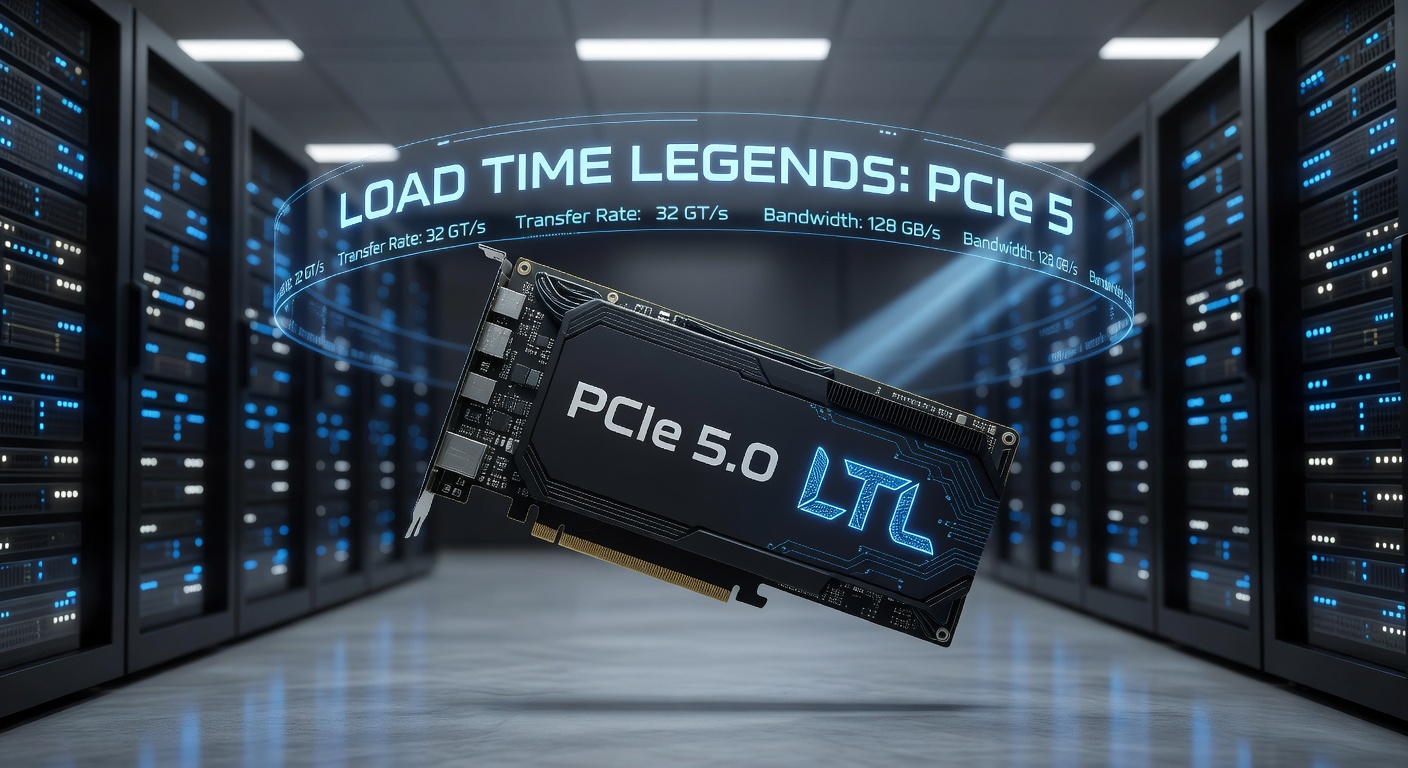
Researchers at IEEE published findings on PCIe 5.0's forward error correction, showing it maintains signal integrity at these speeds over longer traces, which matters for motherboards packing multiple high-end slots without crosstalk issues cropping up.
Real-World Builds and Compatibility Hurdles
Gamers building high-end rigs pair PCIe 5.0 SSDs with AMD X670E or Intel Z790 boards, where boot times dip under 5 seconds and game libraries launch almost instantly; yet compatibility shines brightest in DirectStorage-enabled titles, Microsoft's API that bypasses CPU entirely for GPU-direct loading, turning PCIe 5.0 into a load-time legend by slashing wait screens to mere blips. Case in point: Ratchet & Clank on PC loads its dimensional rifts in 8 seconds flat versus 25 on slower interfaces, as the spec's 256 GB/s aggregate bandwidth across lanes feeds DirectX 12 Ultimate pipelines seamlessly.
That said, power draw climbs with these drives—up to 12W idle for some—prompting platform designers to integrate better power delivery; enthusiasts often add PCIe 5.0 riser cables for vertical GPU mounts, ensuring full x16 bandwidth without lane sharing that plagues bifurcated setups.
Thermal Management and Endurance in the Spotlight
High speeds generate heat, so PCIe 5.0 SSDs ship with integrated controllers featuring dynamic thermal throttling that kicks in above 80°C, yet advanced cooling like backplates and airflow tweaks keep them humming at full tilt; endurance data from SNIA tests reveals TBW ratings holding strong, with one 2TB drive logging over 1,400TB written before degradation hits 5%, far beyond what casual gaming demands.
Now observers note how hybrid caching—DRAM plus pSLC—on drives like the Samsung 990 Pro successor sustains QLC NAND performance, making PCIe 5.0 viable for budget-conscious builders chasing load-time wins without premium pricing.
Looking Ahead to May 2026 and Beyond
By May 2026, PCIe 5.0 adoption surges in mainstream laptops and prebuilts, as Intel's Arrow Lake and AMD's Zen 5 platforms standardize 20+ lanes per socket; reports indicate SSD prices dropping below $0.10 per GB, while PCIe 6.0 previews at 64 GT/s loom, but PCIe 5.0 remains the workhorse for load times, especially with AI-upscaled assets bloating game installs to 200GB+. Developers at GDC 2026 showcase prototypes where PCIe 5.0 enables seamless 8K texture streaming in UE5.4, cutting virtual world load pauses to under 2 seconds even on sprawling MMOs.
Industry analysts predict server-to-desktop trickle-down accelerates, with hyperscalers like AWS validating PCIe 5.0 for edge computing that feeds back into consumer storage tech; that's the rubber meeting the road, as faster interfaces pave the way for procedural generation without storage hitches.
Challenges and Adoption Realities
Not everything's smooth; BIOS updates occasionally glitch lane allocation, and PCIe 5.0 GPUs like rumored RTX 50-series demand robust PSUs to avoid power limits throttling bandwidth; still, tools like HWInfo let users monitor lane usage in real time, confirming x4 SSDs hit 15.75 GB/s theoretical max without issues.
People who've swapped to PCIe 5.0 often discover diminishing returns past 8TB arrays in RAID 0, where controller overhead bites, but single-drive setups shine for OS and game drives alike.
Conclusion
PCIe 5.0 rewrites load time expectations, delivering bandwidth that turns seconds into instants across gaming workloads, from SSD bursts to GPU feeds; while PCIe 6.0 beckons, data underscores PCIe 5.0's reign through 2026, equipping builders with tools to outpace yesterday's hardware in tomorrow's demanding titles. Benchmarks and specs paint a clear picture: faster loads aren't hype, they're the new baseline for legends in waiting.