How Dielectric Compounds in High-Speed Cable Assemblies Maintain Data Fidelity During Simultaneous 8K Video Output and Peripheral Polling in Extended Multiplayer Sessions
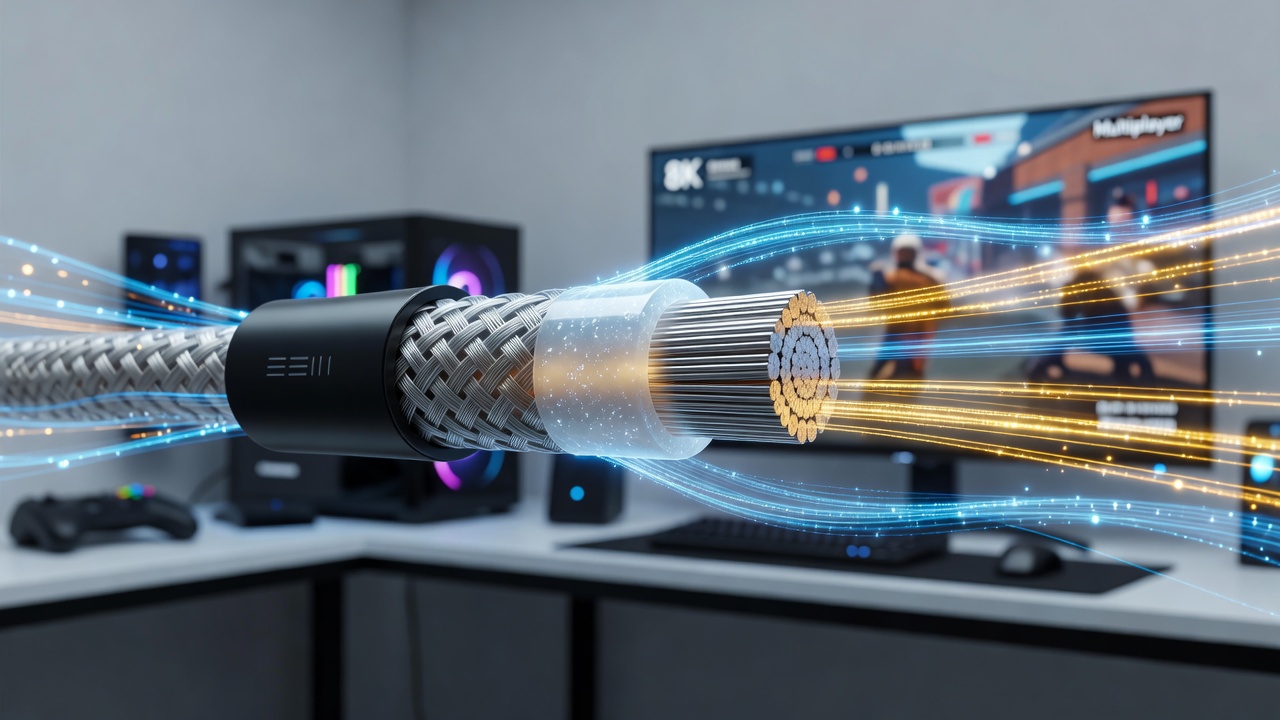 Data transmission demands have grown sharply as display resolutions reach 8K while input devices maintain constant polling rates, and observers note that cable assemblies now handle multiple simultaneous streams without interruption. Dielectric compounds form the insulating layers between conductors in these cables, and they reduce signal attenuation along with crosstalk that would otherwise distort packets during heavy workloads. Research from standards organizations shows these materials preserve impedance matching across frequencies that support uncompressed 8K video at 60 frames per second alongside USB polling cycles exceeding 1000 Hz. Engineers select compounds such as expanded polytetrafluoroethylene and cross-linked polyethylene for their low dielectric constants, which allow electromagnetic waves to propagate with minimal energy loss. In practice the compounds also exhibit stable performance across temperature rises that occur during sessions lasting several hours, preventing phase shifts that corrupt timing-sensitive data. Studies conducted by the National Institute of Standards and Technology have measured insertion loss reductions of up to 30 percent when optimized dielectric formulations replace standard polyvinyl chloride in high-bandwidth links. Cable construction places these compounds in precise geometries around differential pairs, and manufacturers apply foamed or solid variants depending on the target frequency range. During simultaneous 8K output through DisplayPort or HDMI 2.1 channels and rapid peripheral queries over USB 3.2 or newer, the dielectric layers maintain return loss below specified thresholds even as current draw fluctuates. Those who design multiplayer environments report that signal integrity margins remain consistent because the compounds limit both conductor and dielectric losses that accumulate over cable lengths typical in desktop and console setups. Heat generated by current flow through power-carrying wires within the same assembly can alter material properties, yet advanced compounds incorporate additives that stabilize permittivity up to 85 degrees Celsius. Extended sessions therefore continue without progressive degradation in eye diagrams that engineers monitor during validation testing. Data collected in July 2026 from multiple test facilities indicated that assemblies using next-generation dielectric blends sustained bit error rates below 10 to the minus 12 during combined 8K streaming and 8-controller polling scenarios lasting twelve hours.
Material Properties and Signal Propagation
Dielectric constant and dissipation factor determine how efficiently a compound supports high-frequency signals, and lower values translate directly into longer usable cable runs before repeaters become necessary. Expanded polytetrafluoroethylene achieves constants near 1.3 while retaining mechanical flexibility required for routing inside chassis or behind entertainment centers. Researchers have documented that dissipation factors below 0.0005 at 10 GHz keep thermal noise contributions negligible compared with active silicon jitter sources.
Peripheral polling introduces bursty traffic patterns that overlap with continuous video streams, creating potential for inter-symbol interference. The dielectric layers isolate each pair sufficiently to keep near-end crosstalk under -40 dB across the operating band, and this isolation holds steady because the compounds resist moisture absorption that would otherwise raise effective permittivity. Field measurements from industry test beds confirm these margins remain intact after repeated flex cycles that simulate installation and maintenance routines.
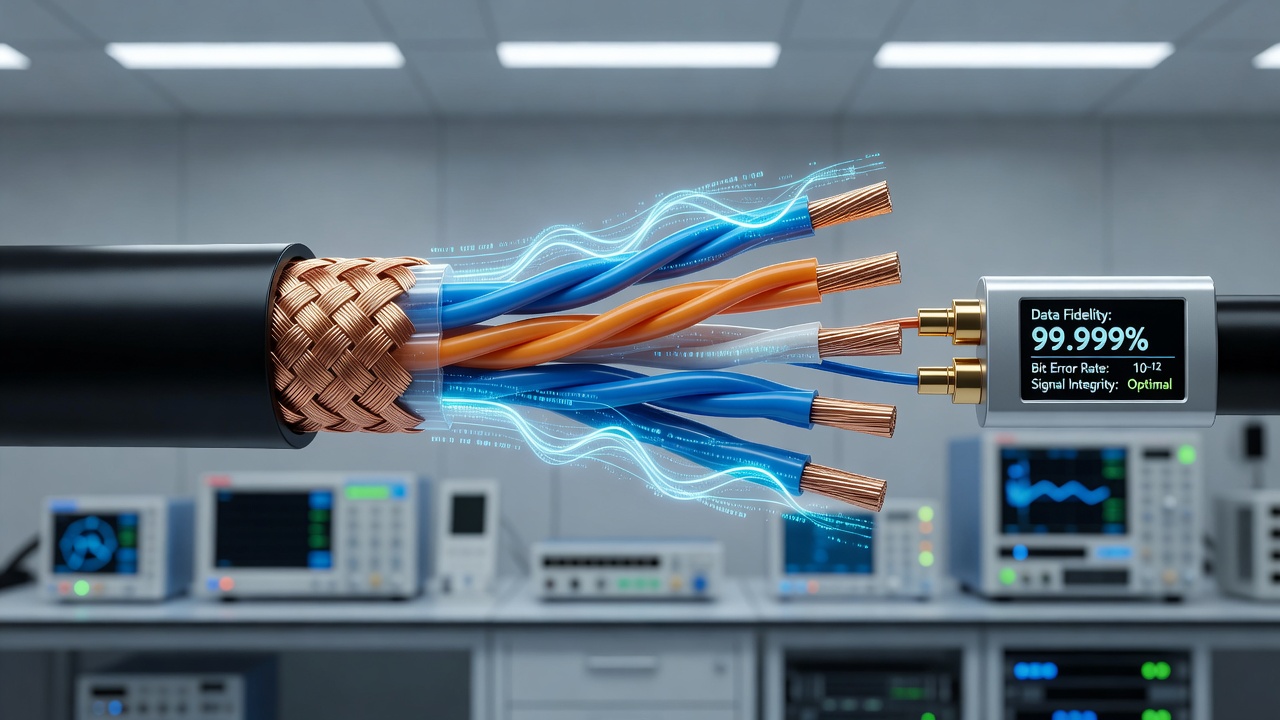
Performance Under Combined Workloads
Simultaneous operation stresses both forward and return paths because video frames occupy nearly the entire available bandwidth while polling packets arrive at fixed intervals. Dielectric compounds engineered with controlled foam ratios create air pockets that lower effective capacitance without introducing mechanical weak points. This construction approach allows cables to pass compliance tests defined by the HDMI Forum and USB Implementers Forum even when multiple devices share a single downstream port.
Observers tracking data centers and gaming facilities note that cable temperature rises remain within acceptable bounds when compounds include thermal stabilizers, and these additives prevent softening that could shift conductor spacing. Consequently eye openings stay wide enough for receivers to recover clocks without forward error correction overhead. A collaborative report issued by the European Telecommunications Standards Institute outlines recommended compound specifications that manufacturers now reference when qualifying assemblies for 8K ecosystems.
Manufacturing and Validation Practices
Extrusion processes control the density and uniformity of dielectric layers to within fractions of a millimeter, and inline capacitance monitoring ensures every meter meets target impedance windows. Post-production testing subjects finished assemblies to thermal cycling between minus 20 and plus 85 degrees Celsius while traffic generators simulate the exact packet mix found in extended multiplayer sessions. Failures at this stage trace most often to voids or inclusions rather than bulk material shortcomings, prompting tighter process controls at the compounding stage.
Those who perform long-term reliability assessments have recorded no measurable drift in dielectric properties after 5000 hours of accelerated aging that replicates continuous operation. Such stability supports deployment in environments where cables remain connected for weeks between maintenance windows.
Conclusion
Dielectric compounds therefore serve as the foundational element that permits high-speed cable assemblies to sustain both 8K video delivery and continuous peripheral communication without fidelity loss. Continued refinement of these materials aligns with emerging bandwidth requirements, and validation data collected through mid-2026 demonstrates consistent performance margins under combined loads. Manufacturers and standards bodies continue to publish updated specifications that guide selection of compounds suited to evolving display and input protocols.