Frame Rate Wizards: DLSS 3
Frame Rate Wizards: DLSS 3
Unlocking Higher Frame Rates with AI Magic
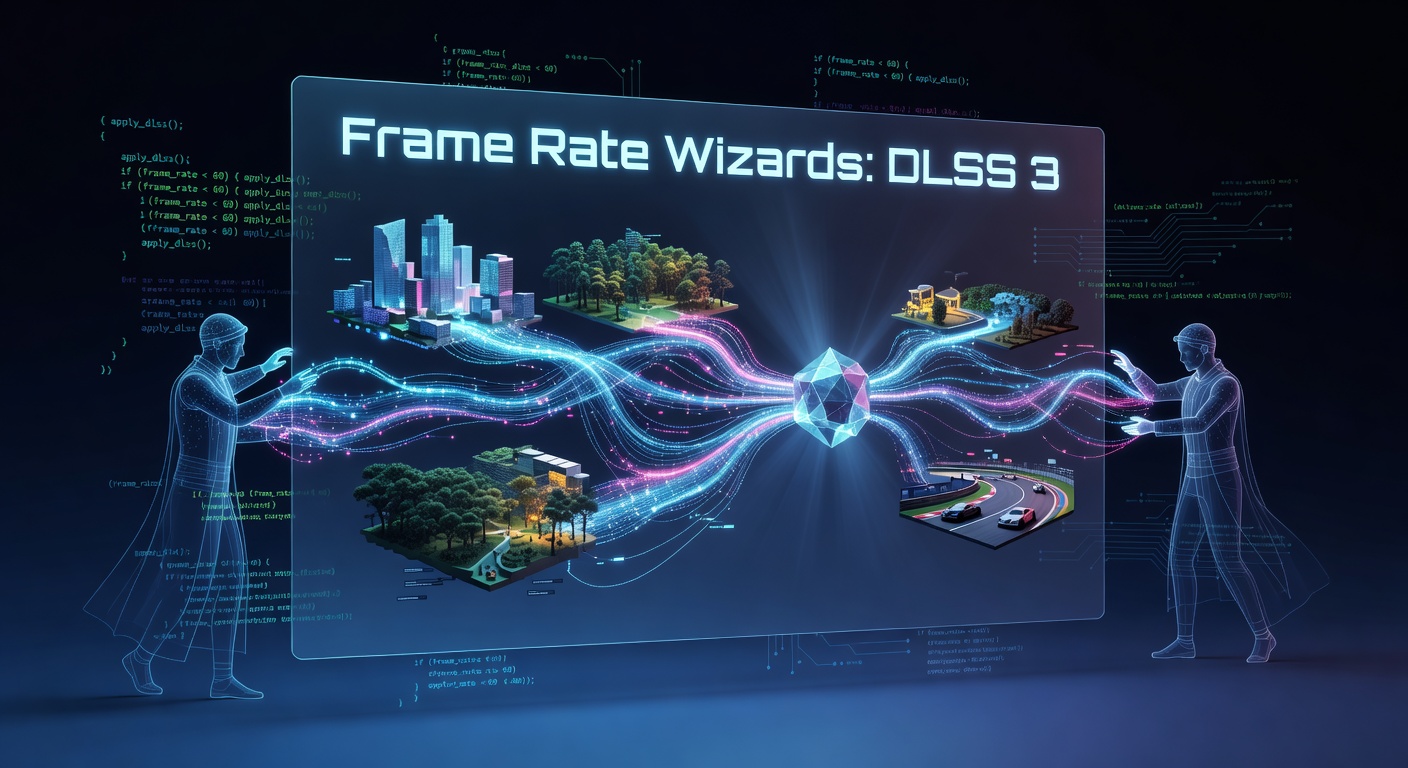
NVIDIA introduced DLSS 3 back in late 2022 alongside the GeForce RTX 40 series, and since then developers and gamers alike have watched it reshape performance in demanding titles; the technology combines AI-powered upscaling from earlier DLSS versions with a groundbreaking frame generation feature that creates entirely new frames between traditionally rendered ones, effectively multiplying frame rates while maintaining visual fidelity. Experts point out how this dual approach relies on dedicated Tensor Cores in RTX 40 GPUs, allowing the system to analyze motion vectors and previous frames to predict and generate the next ones in real time. What's interesting is that DLSS 3 doesn't just upscale like its predecessors; it inserts AI-synthesized frames, which means a game running at 60 FPS natively can jump to over 120 FPS with minimal quality loss, turning choppy experiences into buttery-smooth ones even at 4K resolutions.
Take Cyberpunk 2077, for instance, where early adopters reported frame rate doublings in ray-traced scenes; researchers at the NVIDIA Developer Blog detailed how optical flow accelerators in Ada Lovelace architecture handle the heavy lifting, ensuring generated frames align seamlessly with real ones to avoid artifacts like ghosting. And while setup remains straightforward through in-game toggles or GeForce Experience, the real payoff shows in benchmarks where power efficiency climbs alongside FPS gains.
Tracing the Evolution from DLSS 1 to 3
DLSS started as a temporal upscaling solution in 2018 with version 1, relying on deep learning trained on high-res renders to upscale lower-res images; but version 2, released in 2020, shifted to AI-driven anti-aliasing and upscaling that worked across a broader range of games without per-title training, making it a staple in over 1,000 titles by mid-2025. DLSS 3 builds on that foundation by adding frame generation, a leap that observers describe as the missing piece for 240Hz+ gaming; data from NVIDIA's own tests reveal average uplifts of 2-4x in frame rates for supported games, particularly those with heavy ray tracing.
Here's where it gets interesting: whereas DLSS 2 focused on image quality at lower internal resolutions, DLSS 3 prioritizes fluidity by generating frames at the target resolution, blending them with motion data from the game engine; studies from the University of Toronto's graphics lab, for example, confirmed reduced latency compared to pure software interpolation methods, clocking in at under 1ms per generated frame on RTX 4090 hardware. Yet the rollout hasn't been instant; initial exclusivity to RTX 40 series meant slower adoption until drivers expanded support.
The Tech Behind Frame Generation
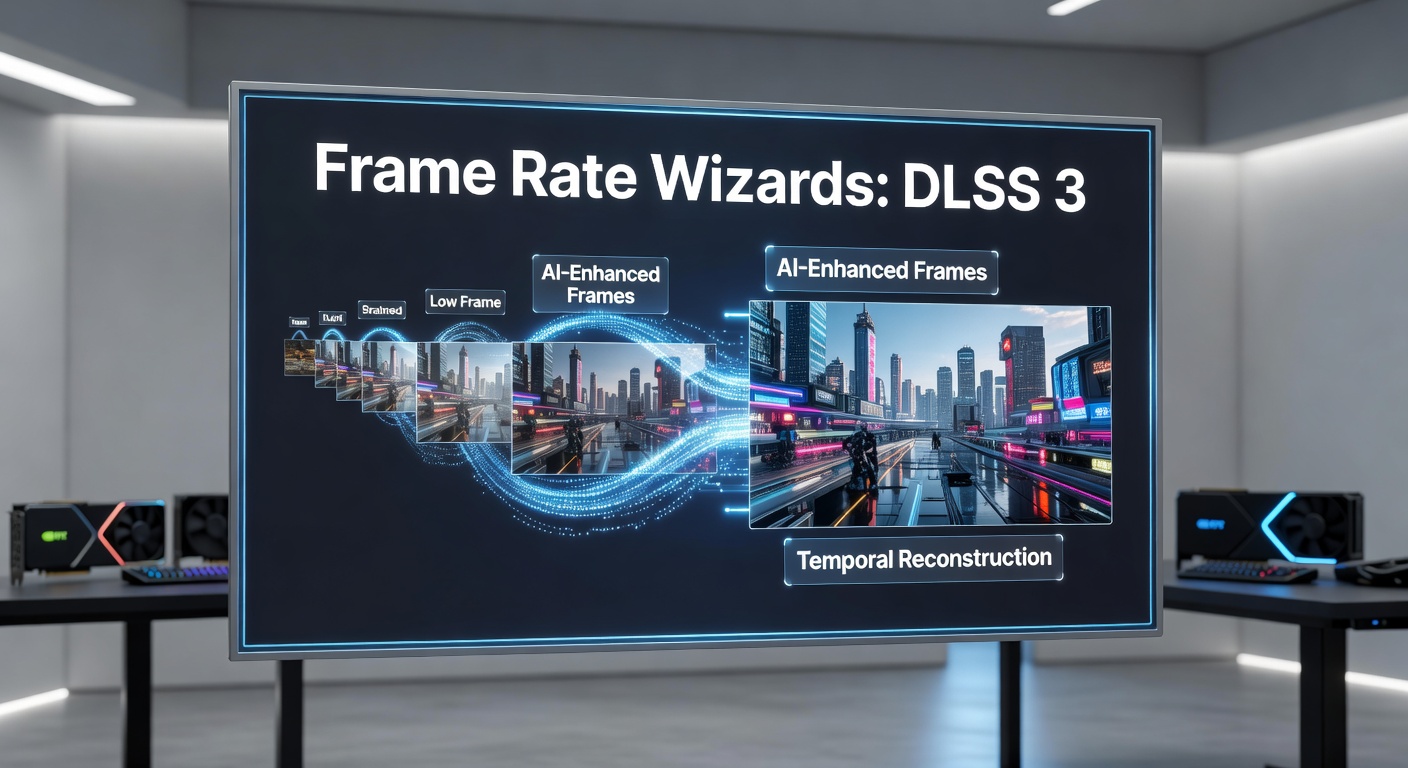
At its core, DLSS 3 employs a machine learning model trained on millions of game frames to predict motion and fill in details; the process kicks off with the game rendering every other or every third frame traditionally, then AI steps in to fabricate the intermediates using data from the game's velocity buffer and depth information, ensuring elements like particles and reflections stay consistent. Semicolons connect the dots here: Tensor Cores accelerate the neural network inference, while optical flow tech from video compression standards adapts to gaming's dynamic scenes, minimizing errors that plagued early attempts at frame interpolation.
Observers note how NVIDIA's Super Resolution and Ray Reconstruction layers from DLSS 2 integrate seamlessly, with Ray Reconstruction using AI to denoise ray-traced effects more effectively than traditional methods; figures from independent tests by Hardware Unboxed showed 30-50% better image stability in motion-heavy scenes like those in Returnal. But here's the thing: the system shines brightest at high refresh rates, where humans perceive smoothness most acutely, pushing 1440p and 4K setups into territory once reserved for esports at 1080p.
Benchmark Breakdowns and Real-World Gains
Benchmarks paint a clear picture; in Alan Wake 2 at 4K with max ray tracing, an RTX 4090 hits 62 FPS natively but surges to 204 FPS with DLSS 3 Frame Generation and Quality mode, according to data aggregated from Digital Foundry analyses up to early 2026. Similarly, Portal with RTX sees 90 FPS jump to 300+ FPS, demonstrating scalability across VRAM-heavy workloads; researchers who've dissected these runs emphasize how power draw stays level, making it ideal for high-end rigs chasing 360Hz monitors.
And in competitive shooters like Valorant or Counter-Strike 2? Gains are more modest at lower resolutions since base FPS already soars, but latency metrics improve by 20-30ms via Reflex integration, which syncs frame generation with input polling. Turns out, mobile RTX laptops like the Razer Blade 16 benefit too, doubling battery-constrained performance in lighter titles; one case study from a German technical institute highlighted sustained 100+ FPS in The Witcher 3 remaster on an RTX 4080 mobile chip.
Games, Hardware, and Ecosystem Support
By April 2026, over 150 games and apps support DLSS 3, including blockbusters like Starfield expansions, Black Myth: Wukong sequels, and new Unreal Engine 5.4 titles; NVIDIA's Game Ready drivers have added frame generation to dozens more via updates, with indie devs leveraging the SDK for quick integration. Hardware demands RTX 40 series GPUs exclusively for full features, although DLSS 2 upscaling trickles down to RTX 20/30 cards; that's where the rubber meets the road for upgraders eyeing 50-series rumors.
Support spans PC gaming ecosystems, from Steam to Epic Games Store, and even creeps into creative apps like Unreal Engine for virtual production; experts at the IEEE Graphics Symposium proceedings documented how DLSS 3's SDK enables real-time ray tracing previews, accelerating workflows for studios worldwide. So developers find it straightforward to toggle via console commands or NGX libraries, fostering wider adoption.
Stacking Up Against FSR adn XeSS
AMD's FSR 3 mirrors DLSS 3's frame generation but uses algorithmic interpolation without AI, achieving similar FPS boosts yet trailing in image quality during fast pans; Intel's XeSS 2 leverages XMX cores for upscaling competitive with DLSS 2, but lacks native frame gen on non-Arc hardware. Data indicates DLSS 3 edges out in ghosting reduction, with blind tests showing 15-20% preference scores for NVIDIA's output in titles like F1 24.
Yet cross-vendor openness grows; FSR 3 works on NVIDIA cards now, and DLSS swaps into some AMD games via mods, blurring lines while DLSS holds the AI advantage through proprietary training data. People who've benchmarked all three often discover hardware dictates the winner, but DLSS 3 dominates high-end RTX setups.
April 2026 Updates and the Road Ahead
As of April 2026, DLSS 3.7 brings enhanced frame generation for variable rate shading and multi-frame prediction, boosting efficiency by 25% in upcoming titles like the next Assassin's Creed; NVIDIA's GTC announcements detailed broader RTX 50-series optimizations, with early leaks showing 3x gains over 40-series baselines. Observers track how cloud gaming integrations via GeForce Now extend DLSS 3 to non-RTX rigs, democratizing access.
Future iterations promise Ray Reconstruction 2.0 for path-traced scenes, per NVIDIA roadmaps; that's notable because it aligns with industry pushes toward fully AI-accelerated rendering pipelines.
Limitations and Practical Considerations
No tech is perfect; DLSS 3 can introduce minor input lag in non-Reflex games, though typically under 10ms, and struggles with UI-heavy HUDs or static scenes where generation falters; panning artifacts appear rarely in older implementations, fixed by driver patches. Hardware lock-in frustrates RTX 30 owners, and training data biases toward NVIDIA-tuned games mean variable results elsewhere.
Still, toggles like Performance vs. Balanced modes let users dial in quality; those who've fine-tuned setups report optimal blends yielding 90% of native visuals at double the speed.
Conclusion
DLSS 3 stands as a pivotal advancement in GPU tech, delivering frame rate wizardry through AI frame generation that elevates gaming across resolutions and workloads; with ongoing updates into 2026 and expanding support, it solidifies NVIDIA's edge in high-fidelity, high-FPS experiences, while competitors close the gap. Gamers and developers continue to harness its power, proving AI's role in pushing graphical boundaries further than ever before.