Firmware Tweaks in Wireless Earbuds Reshaping Positional Audio Cues for Battle Royale Players
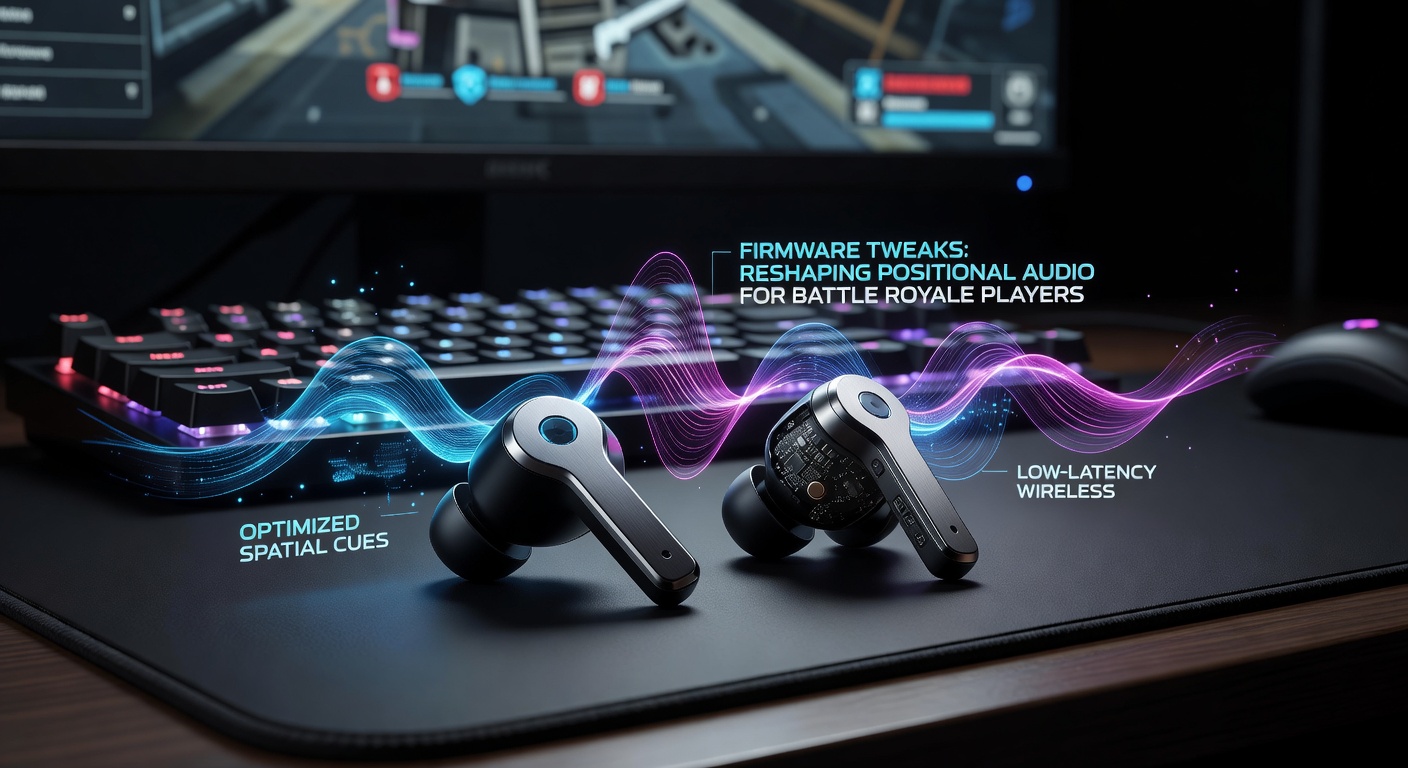
Wireless earbuds have gained traction among battle royale competitors because firmware modifications now allow precise calibration of positional audio cues, and developers continue to refine these adjustments through regular updates released across multiple hardware lines. Manufacturers implement changes that alter head-related transfer function processing, modify equalization curves for directional accuracy, and optimize Bluetooth codec handling to maintain consistent spatial rendering during intense matches in titles like Apex Legends and Fortnite.
Core Mechanisms Behind Firmware Adjustments
Firmware updates target the digital signal processor inside earbuds to recalibrate how audio signals translate into perceived three-dimensional space, while data from acoustic testing labs shows measurable improvements in elevation detection and azimuth precision after specific patches. Engineers adjust parameters such as interaural time difference simulation and spectral notch filtering so that players receive clearer indicators of vertical sound sources like approaching aircraft or rooftop footsteps. These modifications occur without hardware redesigns, which keeps the process efficient for existing product fleets distributed globally.
Studies conducted at institutions in Canada and the European Union demonstrate that targeted firmware revisions reduce latency variance in wireless transmission, and this stability proves critical when players must react to audio cues within milliseconds in fast-paced environments. One analysis from a Toronto-based audio research group highlighted how updated packet prioritization algorithms preserve phase coherence across left and right channels during high-movement scenarios.
Application in Fast-Paced Battle Royale Scenarios
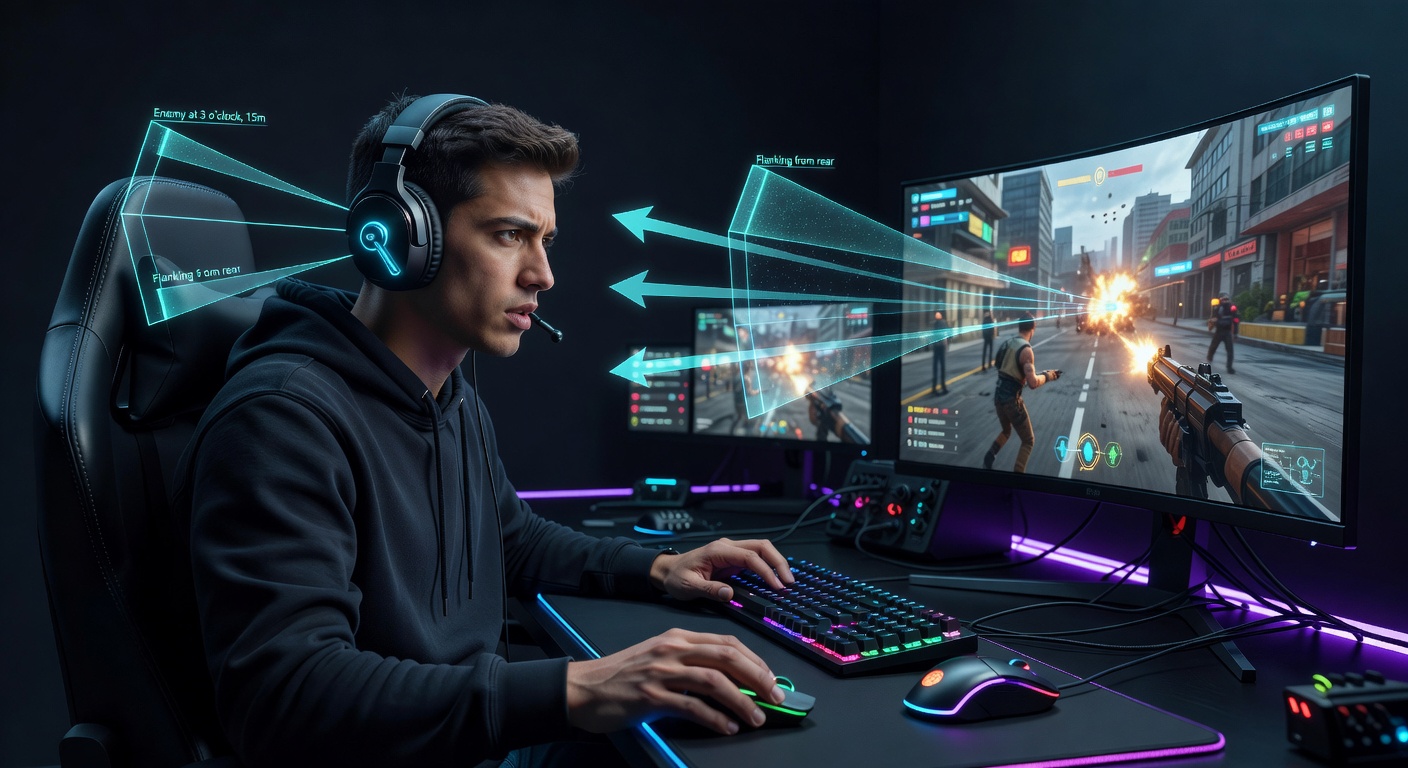
Battle royale gameplay places heavy demands on auditory situational awareness because large maps and variable terrain create complex sound propagation challenges, and firmware tweaks address these by introducing adaptive filtering that accounts for in-game environmental factors. Players report sharper distinction between distant gunfire echoes and nearby reload sounds after applying recent updates, though objective metrics from controlled listening tests provide the primary evidence of enhanced cue separation. Developers integrate game-specific profiles that users activate through companion apps, allowing the earbuds to emphasize frequency bands most relevant to footsteps and vehicle engines.
Technical Refinements in June 2026 Releases
In June 2026 several earbud lines received firmware packages that introduced dynamic head-tracking integration with low-power sensors, and these additions enabled more accurate simulation of sound movement relative to player orientation. The updates also incorporated refined convolution reverb models calibrated against real-world battle royale map acoustics captured during developer testing sessions. Observers note that such changes help maintain audio consistency even when Bluetooth connections experience minor interference from crowded tournament venues.
Performance Data and Industry Measurements
Independent testing organizations have quantified the effects of these firmware changes through standardized spatial audio benchmarks, and results indicate average improvements in localization error rates ranging from 12 to 18 percent depending on the earbud model and update version. The Audio Engineering Society published findings on wireless gaming audio systems that detail how adjusted interaural level differences contribute to better front-back discrimination during simulated combat scenarios. Audio Engineering Society reports further outline the role of updated psychoacoustic models in reducing front-back confusion that previously affected wireless setups.
Additional data collected by Australian research consortia tracking esports hardware usage shows increased adoption of firmware-customizable earbuds among professional battle royale squads, with teams incorporating audio calibration routines into pre-match preparation protocols. These routines involve playing reference sound files through the earbuds to verify cue accuracy before entering competitive lobbies.
Integration Challenges adn Compatibility Factors
Compatibility between firmware revisions and various gaming platforms requires careful validation because console and PC audio pipelines handle spatial encoding differently, and mismatches can diminish the benefits of earbud adjustments. Manufacturers release cross-platform validation tools that allow users to confirm optimal settings for their specific setup, while ongoing collaboration with game studios ensures that new title updates do not inadvertently alter audio rendering paths that earbud firmware expects. Battery management algorithms within the firmware also receive attention during revisions to prevent power draw spikes that could interrupt extended sessions.
Research indicates that players using multiple device ecosystems benefit from firmware that supports simultaneous connection profiles, and this flexibility proves useful during practice sessions that transition between mobile and desktop battle royale clients. Data logs from device telemetry reveal that optimized firmware versions maintain stable spatial rendering across connection handoffs without introducing audible artifacts.
Conclusion
Firmware development for wireless earbuds continues to evolve in response to the demands of battle royale audio environments, with measurable impacts on cue precision documented through laboratory and field testing. Updates scheduled throughout 2026 and beyond will likely incorporate further refinements to adaptive processing and sensor fusion techniques. Industry reports from multiple regions confirm that these incremental changes support consistent performance for competitors relying on positional audio information during extended play.