Exploring Dielectric Fluid Formulations in Immersion Cooling Baths for Sustained Overclock Stability in Multi-GPU Rendering Farms
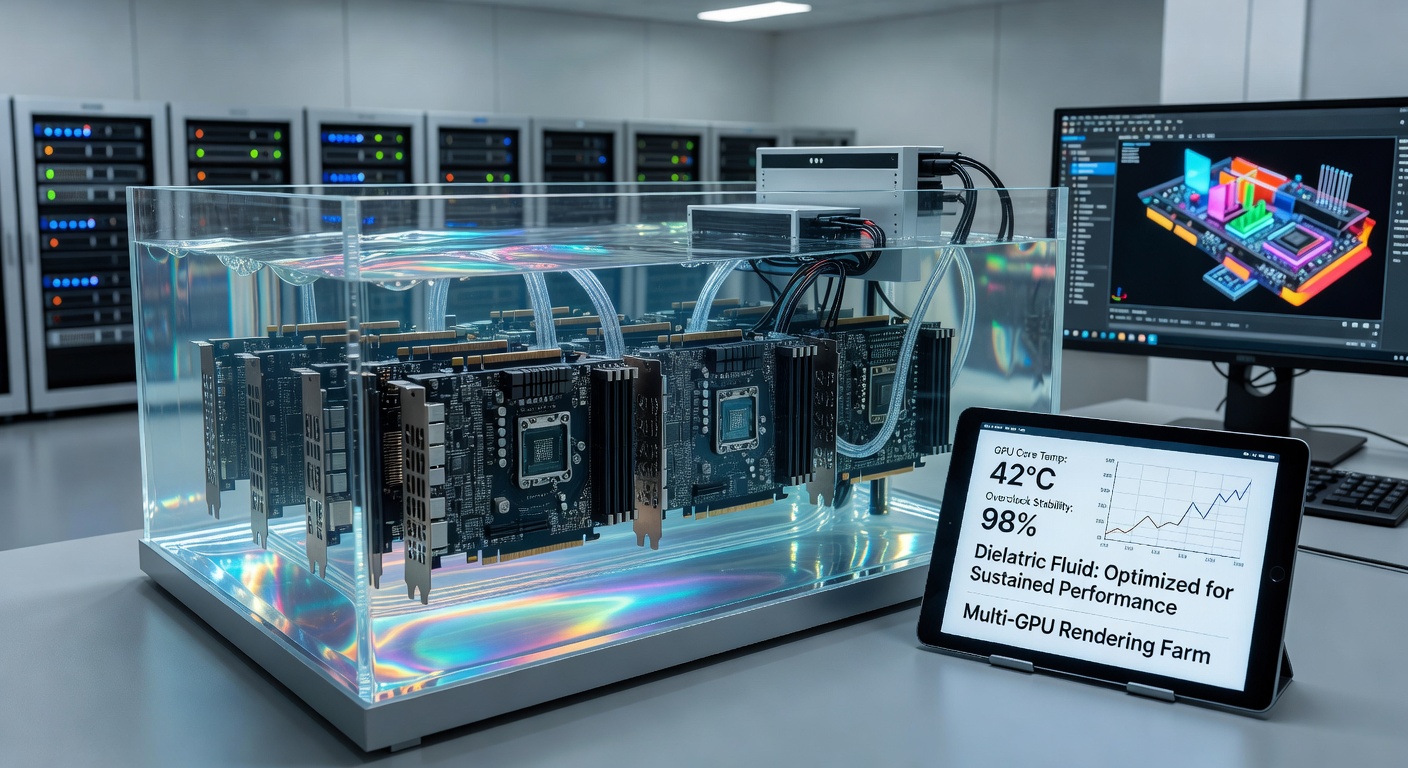
Rendering farms that rely on clusters of overclocked GPUs face constant thermal management challenges, and dielectric fluid formulations have emerged as a key area of development for immersion cooling systems. These fluids allow direct contact with electronic components while preventing electrical shorts, and their specific chemical compositions determine how effectively they maintain stable operating temperatures during extended high-load sessions.
Mineral oil derivatives represent one established category, yet synthetic options such as fluorinated ethers and silicone-based compounds now receive more attention because they offer lower viscosity alongside higher thermal conductivity values. Data from laboratory tests shows that fluids with optimized additive packages can reduce temperature gradients across GPU dies by measurable margins, which in turn supports consistent clock speeds without the need for frequent throttling adjustments.
Key Properties of Dielectric Fluids in Immersion Systems
Thermal conductivity, specific heat capacity, and dielectric strength form the primary metrics that engineers evaluate when selecting formulations for multi-GPU environments. Higher thermal conductivity enables faster heat transfer away from dense transistor arrays, while adequate dielectric strength ensures insulation remains intact even at elevated voltages used during overclocking. Viscosity plays an equally important role because lower values improve fluid circulation around tightly packed cards and reduce pump energy requirements in large bath setups.
Researchers at several institutions have documented how certain perfluoropolyether blends maintain performance characteristics across temperature ranges typical of 24-hour rendering cycles. These measurements indicate that fluid degradation rates stay minimal when antioxidant stabilizers are included at precise concentrations, which supports longer intervals between fluid replacements in commercial facilities.
Overclock Stability Considerations for Multi-GPU Configurations
Sustained overclocking in rendering farms demands uniform cooling across every GPU in the array, and immersion baths achieve this through direct fluid contact that eliminates air gaps common in traditional heatsink designs. Formulations that balance heat capacity with low surface tension allow bubbles and vapor pockets to disperse quickly, preventing localized hot spots that could trigger instability during peak computational loads.
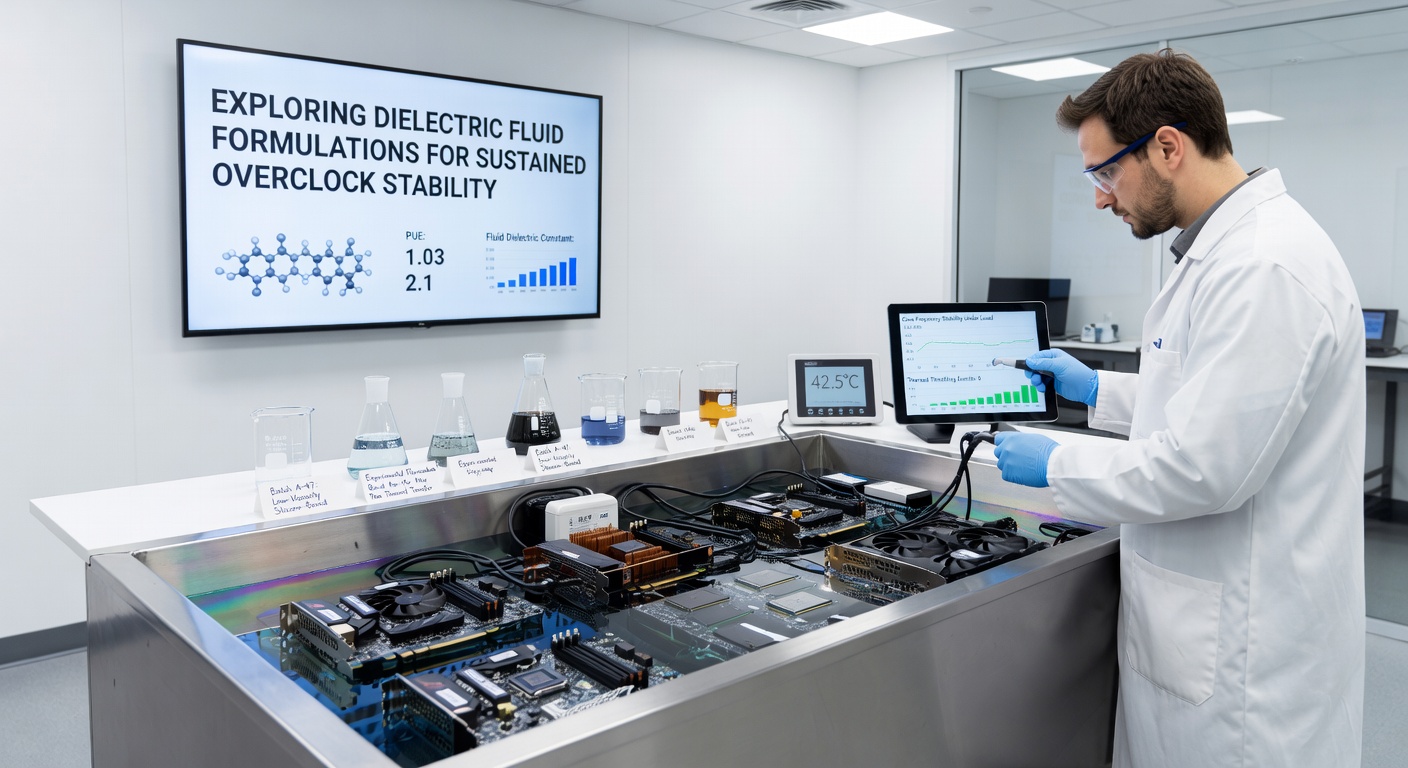
Monitoring data collected from operational farms reveals that certain hydrocarbon-based mixtures paired with corrosion inhibitors extend the duration GPUs can maintain elevated core frequencies before thermal limits intervene. Compatibility testing also covers interactions with PCB materials and solder joints, because prolonged exposure to aggressive additives can affect long-term reliability even when short-term cooling performance appears favorable.
Recent Developments and Testing Protocols
Industry groups and academic teams continue to refine testing protocols that simulate the continuous workloads found in animation studios and visual effects pipelines. In June 2026 several collaborative projects released updated datasets comparing fluid performance under varying power densities, and these reports highlight how additive chemistry influences both immediate heat removal and gradual fluid aging characteristics.
According to findings shared through the U.S. Department of Energy efficiency research portal, optimized synthetic fluids demonstrated measurable improvements in energy efficiency metrics for high-density compute installations. Parallel work conducted by Australian research organizations has focused on bio-derived dielectric options that maintain comparable stability profiles while addressing environmental handling considerations during large-scale fluid management.
Practical Implementation Factors
Facilities transitioning to immersion cooling must account for fluid compatibility with existing infrastructure components such as pumps, seals, and filtration systems. Maintenance schedules typically include periodic sampling to track contamination levels and dielectric property shifts, because even minor deviations can affect overclock consistency across hundreds of GPUs operating simultaneously.
Case examples from European research consortia illustrate how modular bath designs paired with tailored fluid formulations allow incremental scaling without compromising thermal uniformity. These approaches also integrate sensors that provide real-time feedback on fluid condition, enabling operators to adjust flow rates or schedule maintenance before stability thresholds are approached.
Conclusion
Dielectric fluid formulations continue to evolve in response to the demands of multi-GPU rendering farms that require reliable overclock performance over extended periods. Properties such as thermal conductivity, viscosity, and chemical stability directly influence how effectively these systems maintain consistent operating conditions, and ongoing testing provides the data needed to match specific fluid chemistries with particular hardware configurations and workload patterns.