Circuit Impedance Variations in Enthusiast Motherboards and Their Measured Effects on Data Packet Stability During High-Bandwidth Asset Transfers in Large-Scale Virtual Environments
Yves Günther · Aug 3, 2026
Circuit Impedance Variations in Enthusiast Motherboards and Their Measured Effects on Data Packet Stability During High-Bandwidth Asset Transfers in Large-Scale Virtual Environments
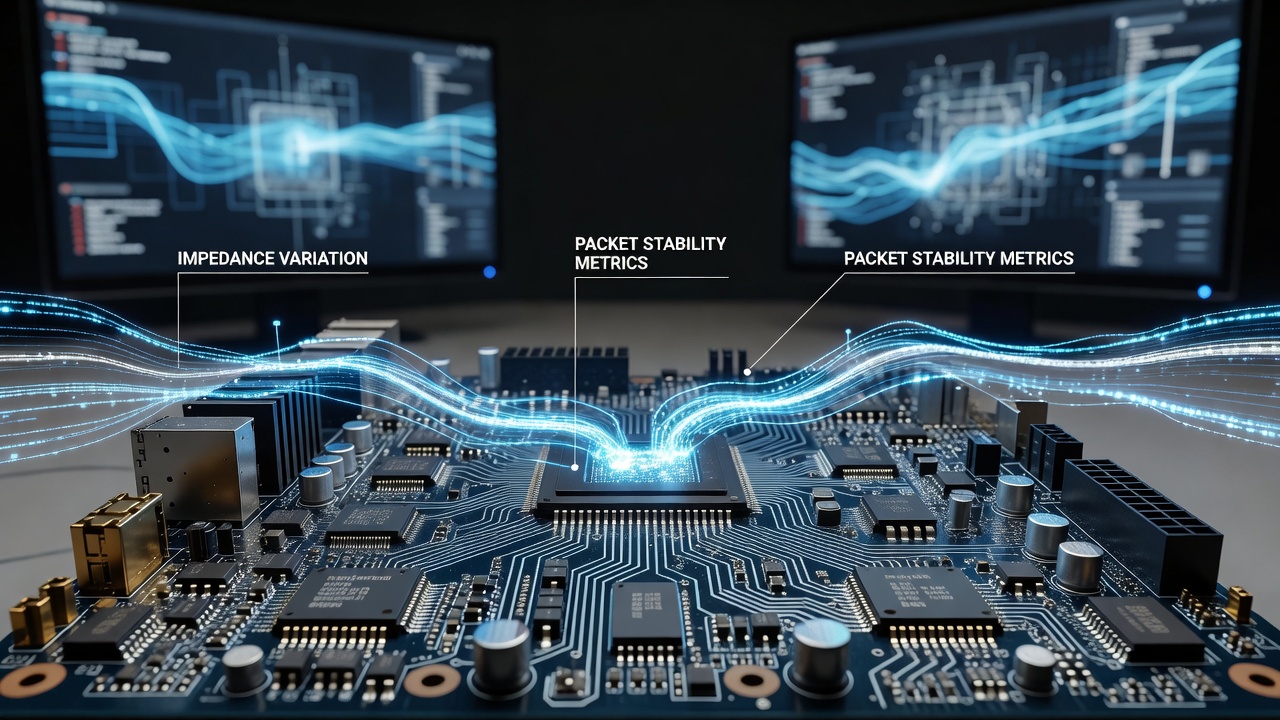
Enthusiast motherboards incorporate complex multilayer PCB designs where trace geometry, dielectric materials, and layer stacking influence impedance levels across high-speed buses such as PCIe 5.0 and DDR5 interfaces; these variations arise from manufacturing tolerances that shift characteristic impedance away from the standard 85-ohm or 100-ohm targets. Data packet stability during sustained transfers depends on maintaining signal integrity, and deviations create reflections that degrade eye diagrams at the receiver end. Researchers track these effects through time-domain reflectometry measurements that quantify return loss and insertion loss along critical paths.
Trace Geometry and Material Factors Behind Impedance Shifts
Trace width, spacing, and copper thickness combine with substrate properties to set baseline impedance, while etching variations of even a few micrometers alter capacitance per unit length and produce measurable mismatches. High-end boards often employ low-loss dielectrics like Megtron 6 or Rogers materials that stabilize impedance across temperature swings, yet batch-to-batch differences still appear in production runs. Observers note that via stub lengths and connector footprints further compound these effects because they introduce discontinuities that scatter energy at gigahertz frequencies typical of asset streaming workloads.
Packet-Level Impacts During Asset Transfers
High-bandwidth transfers in large-scale virtual environments move gigabytes of texture, geometry, and animation data per second across multiple lanes, and impedance mismatches increase bit error rates when reflections overlap with subsequent symbols. Forward error correction in modern protocols masks some errors, but uncorrected packets trigger retransmissions that raise latency spikes observable in frame-time graphs. Studies conducted on test platforms running procedural world generators show that boards with tighter impedance control maintain lower jitter margins even under sustained 200 Gbps aggregate throughput.
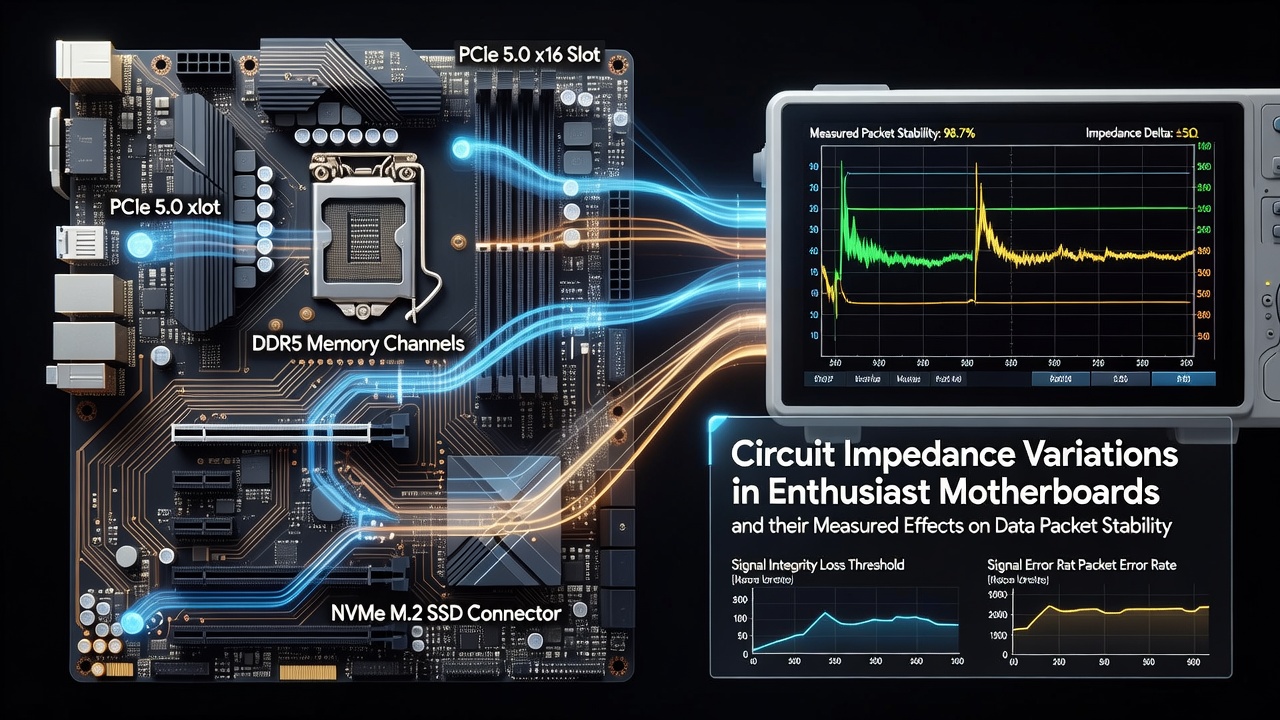
In August 2026 a collaborative report from the National Institute of Standards and Technology and an Australian research consortium documented impedance deviations ranging from 78 to 92 ohms across sample enthusiast boards, correlating these spreads with packet loss percentages during simulated petabyte-scale asset loads. The measurements used vector network analyzers calibrated to 40 GHz, revealing that boards exceeding 5 percent deviation experienced retransmission rates climbing above baseline by factors of three to five under peak transfer conditions.
Measurement Techniques and Industry Benchmarks
Engineers rely on eye diagram analysis, bathtub plots, and bit error rate testers to quantify stability margins, while simulation tools such as Keysight ADS and Ansys HFSS predict impedance behavior before fabrication. Industry groups including the PCI-SIG publish reference designs that specify tolerance bands, and compliance testing ensures interoperability across component vendors. Those who have examined production samples find that boards using tighter stack-up tolerances and controlled-impedance routing rules deliver more consistent results when handling simultaneous CPU-to-GPU and storage-to-memory transfers.
Academic papers from European institutions have examined how temperature-induced impedance drift affects long-duration sessions, showing that certain dielectric formulations limit drift to under 2 percent across 0–85 °C ranges. These findings align with field data collected from rendering farms and simulation clusters where continuous high-bandwidth asset movement occurs. When impedance stays within specification, packet delivery remains deterministic enough to support real-time synchronization across distributed virtual environments without visible hitching.
Design Practices That Influence Stability Margins
Layout teams apply differential pair matching, length tuning, and ground plane stitching to keep impedance uniform, while back-drilling vias removes stubs that would otherwise create resonant peaks. Some manufacturers add on-board calibration circuits that adjust termination values dynamically, compensating for static impedance offsets. Data collected across multiple board revisions indicates that these techniques reduce the incidence of marginal channels that would otherwise limit maximum sustainable transfer rates during asset-heavy sequences.
Regulatory and standards bodies continue to refine test methodologies that capture both frequency-domain and time-domain behavior, ensuring future generations of interfaces maintain headroom even as data rates climb. Reports from research consortia in Canada and the United Kingdom have contributed reference data sets that hardware designers consult when balancing cost against signal integrity requirements in enthusiast segments.
Conclusion
Circuit impedance variations on enthusiast motherboards stem from traceable manufacturing and material factors that directly influence the stability of data packets during high-bandwidth transfers in large-scale virtual environments. Measured outcomes from standardized testing show clear correlations between impedance tolerance and retransmission rates, with tighter control yielding more predictable performance under load. Continued refinement of layout practices, dielectric selection, and compliance verification supports the bandwidth demands of evolving virtual workloads while maintaining packet integrity across sustained sessions.