Chromatic Cascades: Synchronization Protocols for Multi-Device LED Arrays in Synchronized Ambient Lighting for Immersive Gaming Setups
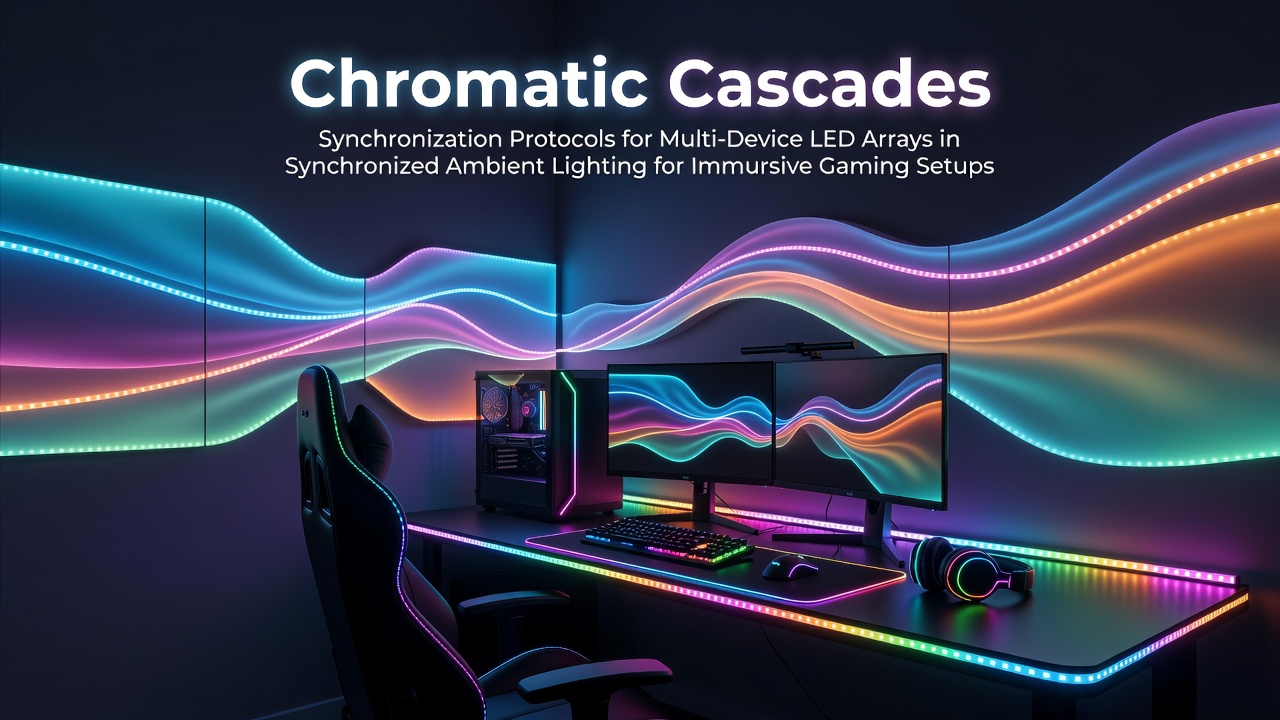
Chromatic Cascades refers to the coordinated control systems that align LED arrays from multiple manufacturers into unified ambient lighting displays for gaming environments, and researchers have documented how these protocols manage timing offsets across devices that range from desk strips to wall panels and ceiling fixtures. Data from industry reports shows that synchronization relies on a combination of network timing protocols and device-specific firmware layers that exchange timestamp packets at intervals as short as five milliseconds.
Core Synchronization Mechanisms
Network-based approaches such as Art-Net and sACN have seen adoption in consumer gaming setups since their original development for stage lighting, while observers note that newer implementations layer additional jitter compensation algorithms on top of these standards. Hardware controllers often integrate real-time clocks that receive corrections from a central host machine through UDP packets, and this setup allows arrays to maintain phase alignment even when individual devices experience minor processing delays from built-in effects engines.
Bluetooth Low Energy mesh networks provide an alternative path for smaller arrays, and studies from European research groups indicate that mesh configurations can sustain synchronization across up to thirty endpoints when packet retransmission rates stay below two percent. In contrast, Wi-Fi direct connections handle higher data throughput for complex color transitions that involve thousands of individual LED channels updated at 120 frames per second.
Protocol Integration in Gaming Ecosystems
Software development kits from major peripheral manufacturers expose application programming interfaces that translate in-game events into lighting commands, and these APIs route data through a common synchronization layer that resolves conflicts when multiple applications attempt simultaneous control. One case examined by university researchers in Canada revealed that hybrid systems combining wired DMX output with wireless fallback achieved 98.7 percent uptime during extended multiplayer sessions recorded in 2025.
Device discovery protocols play a supporting role by mapping the physical layout of LED arrays within a room, and calibration routines measure propagation delays between the host computer and each fixture before active gameplay begins. Figures from the Illuminating Engineering Society of Australia show that proper discovery reduces visible desync artifacts by an average of 64 percent compared with uncalibrated installations.
Performance Metrics and July 2026 Developments
Latency measurements conducted under controlled conditions place end-to-end command delivery between 12 and 28 milliseconds for most commercial kits, and these values remain stable when network traffic stays under 65 percent of available bandwidth. July 2026 brought firmware updates that introduced adaptive bitrate scaling for wireless links, allowing arrays to drop color depth temporarily during congestion rather than lose frame timing.
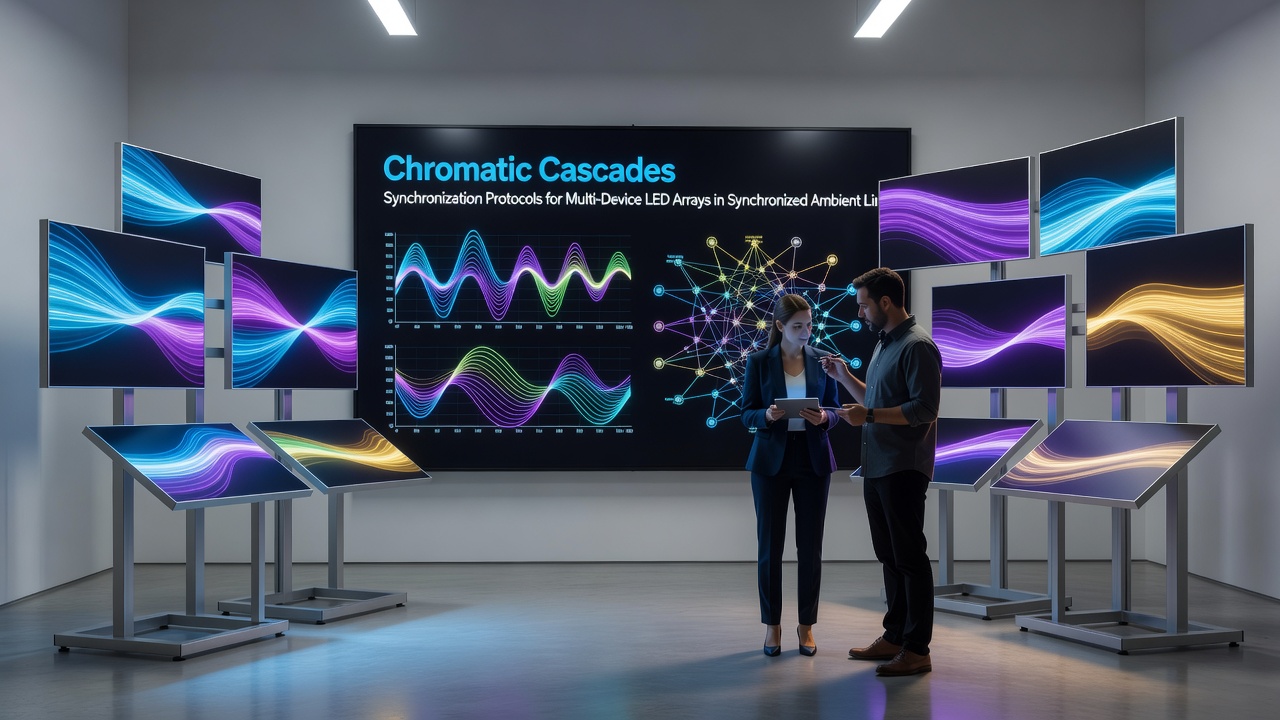
Power sequencing within multi-device installations requires careful coordination so that peak current draws do not exceed circuit limits, and manufacturers have published guidelines that recommend staggered startup sequences spaced at 250-millisecond intervals. Environmental sensors integrated into some controllers adjust brightness curves based on ambient room light, and this feedback loop prevents over-saturation during daytime sessions while preserving contrast at night.
Challenges in Large-Scale Deployments
Signal interference from neighboring wireless networks continues to affect reliability in dense urban installations, yet shielding techniques and channel-hopping algorithms have reduced packet loss rates according to field data collected by Japanese hardware testing facilities. Software buffers absorb brief interruptions, and the system interpolates missing frames using the last known color values until fresh packets arrive.
Cross-vendor compatibility remains an ongoing focus area, with working groups formed under the Consumer Technology Association publishing interoperability test suites that cover color space mapping and timing tolerances. Results released in early 2026 confirmed that 14 out of 17 tested device combinations passed the full synchronization battery without manual intervention.
Conclusion
Chromatic Cascades systems continue to evolve through incremental protocol refinements and expanded device support, and current implementations demonstrate that reliable multi-array synchronization is achievable with existing networking standards when proper calibration and buffering techniques are applied. Ongoing measurements from independent laboratories track improvements in latency consistency and power efficiency, providing objective benchmarks that guide future hardware revisions.