Chiplet-Based CPUs Optimize Background Simulation Handling in Massive Multiplayer Servers
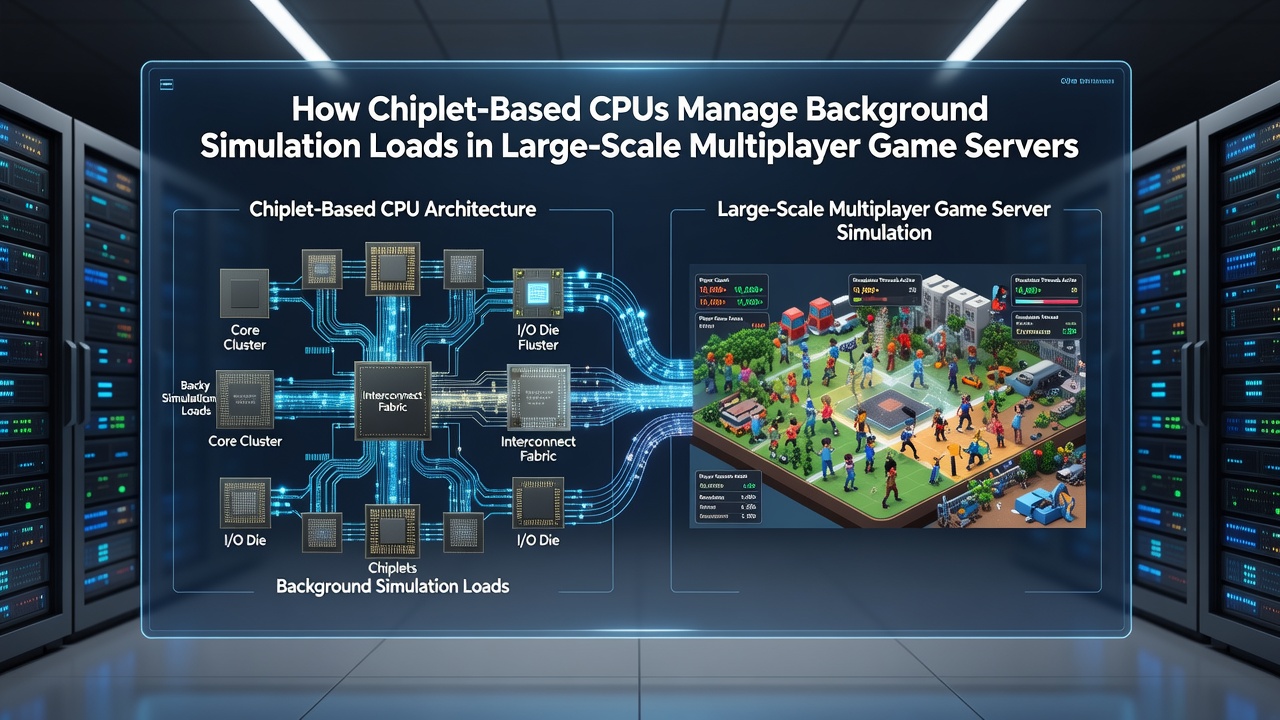
Chiplet architectures have transformed how processors distribute computational tasks across multiple dies, and this shift directly impacts large-scale multiplayer environments where background simulations run continuously alongside player interactions. Data from industry reports shows that servers handling thousands of concurrent users rely on modular chip designs to allocate physics calculations, AI pathfinding, and world-state updates without overloading single monolithic cores.
Core Principles of Chiplet CPU Design in Server Contexts
Manufacturers construct these processors by connecting smaller dies through high-speed interconnects such as AMD's Infinity Fabric or similar technologies from competing vendors, which allows each chiplet to handle specialized workloads while maintaining coherent memory access. Researchers at institutions across North America and Europe note that this modularity reduces thermal hotspots during sustained operations, because individual dies can scale clock speeds independently based on the demands of simulation threads.
Background loads in multiplayer servers typically include non-player character behaviors, environmental physics propagation, and predictive modeling for latency compensation, all of which run in parallel with foreground rendering pipelines on client devices. Chiplet systems assign these tasks across dies using scheduler algorithms that prioritize low-latency communication between components, and benchmarks released in early 2026 demonstrate consistent improvements in frame consistency metrics when compared against traditional single-die CPUs under equivalent loads.
Task Distribution Mechanisms for Simulation Workloads
Schedulers within modern operating systems and game engines map simulation jobs to specific chiplets by analyzing dependency graphs, which ensures that tightly coupled physics calculations stay on the same die to minimize interconnect latency while distributing independent AI routines across available modules. According to findings from a collaborative study by the University of Melbourne and partners in the Asia-Pacific region, this approach yields measurable gains in throughput during peak hours when player counts exceed ten thousand per instance.
Inter-die communication protocols handle data synchronization through dedicated fabric links that support bandwidth exceeding 100 GB/s per connection, enabling seamless updates to shared world states without introducing bottlenecks. Game server operators have observed that chiplet CPUs maintain higher utilization rates across all modules during extended sessions, because background processes like crowd simulation or resource spawning can migrate dynamically as load patterns shift throughout the day.
Performance Data from Real-World Deployments
Figures released by hardware vendors indicate that servers equipped with chiplet processors sustain background simulation rates up to 40 percent higher than previous generations when managing expansive virtual worlds with persistent ecosystems. In June 2026, several major hosting providers began rolling out updated fleets incorporating next-generation chiplet designs, and early telemetry shows reduced variance in tick rates during large-scale events such as in-game festivals or raid encounters.
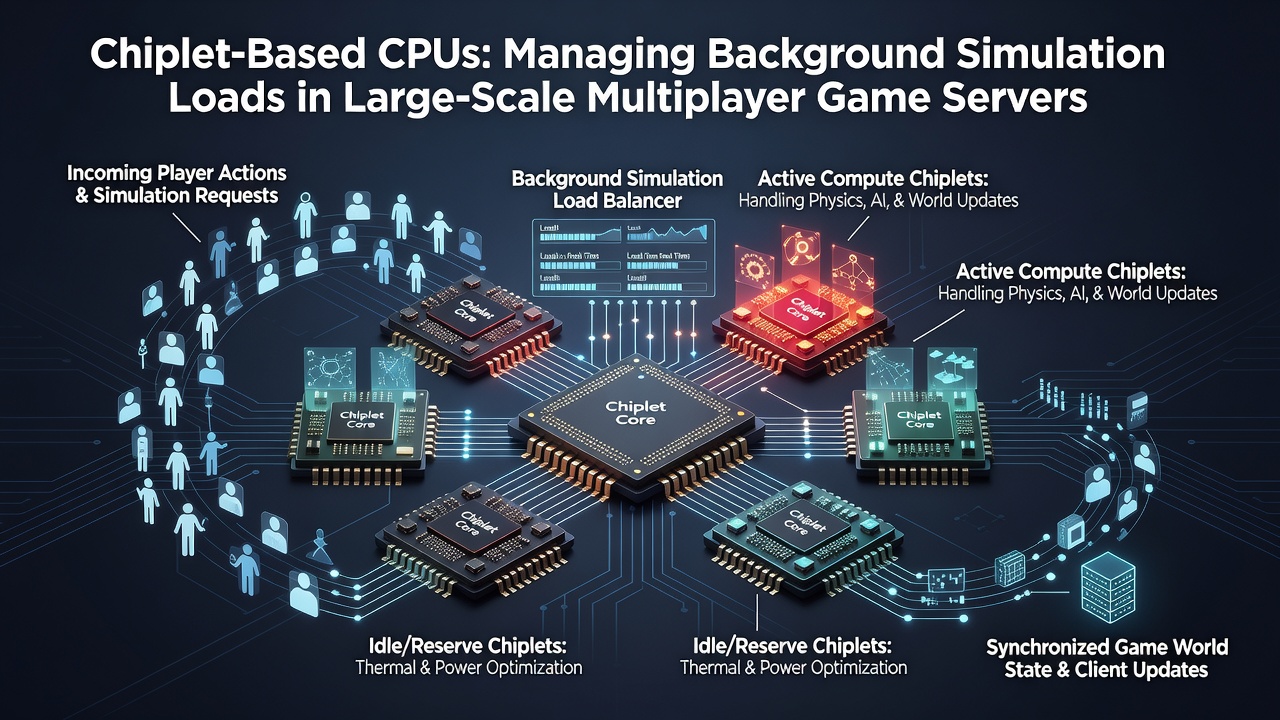
Memory controllers integrated into dedicated I/O chiplets further support these operations by providing high-capacity channels that keep simulation datasets resident in cache hierarchies, reducing reliance on slower system memory accesses. Engineers working with titles that feature procedural content generation report that this configuration prevents desync issues that previously arose when background calculations competed for bandwidth with player input processing.
Scalability Advantages in Expanding Server Environments
Operators scale deployments by adding more chiplet-equipped nodes rather than upgrading monolithic systems, which allows granular adjustments to simulation fidelity based on regional player density. Industry analyses from organizations like the European Games Technology Association highlight how this flexibility supports hybrid cloud setups where certain simulation layers run on-premises while others offload to distributed resources.
Power efficiency metrics also improve under chiplet architectures because unused dies can enter lower power states independently, and this proves valuable for facilities running continuous server instances around the clock. Data centers in Australia and Canada have documented lower overall energy consumption per simulated entity when transitioning to these designs, aligning with broader efforts to optimize infrastructure for growing online populations.
Conclusion
Chiplet-based CPUs continue to reshape backend infrastructure for multiplayer titles by enabling precise allocation of background simulation resources across modular components. As deployment numbers grow through 2026 and beyond, the combination of flexible scheduling, high-bandwidth interconnects, and efficient task migration supports stable performance even as virtual worlds increase in complexity and player scale.