Charting How Onboard Audio Processing Units Shape Positional Sound Accuracy During Extended Multiplayer Sessions in Compact Desktop Builds
Elena Wolf · Jul 27, 2026
Charting How Onboard Audio Processing Units Shape Positional Sound Accuracy During Extended Multiplayer Sessions in Compact Desktop Builds
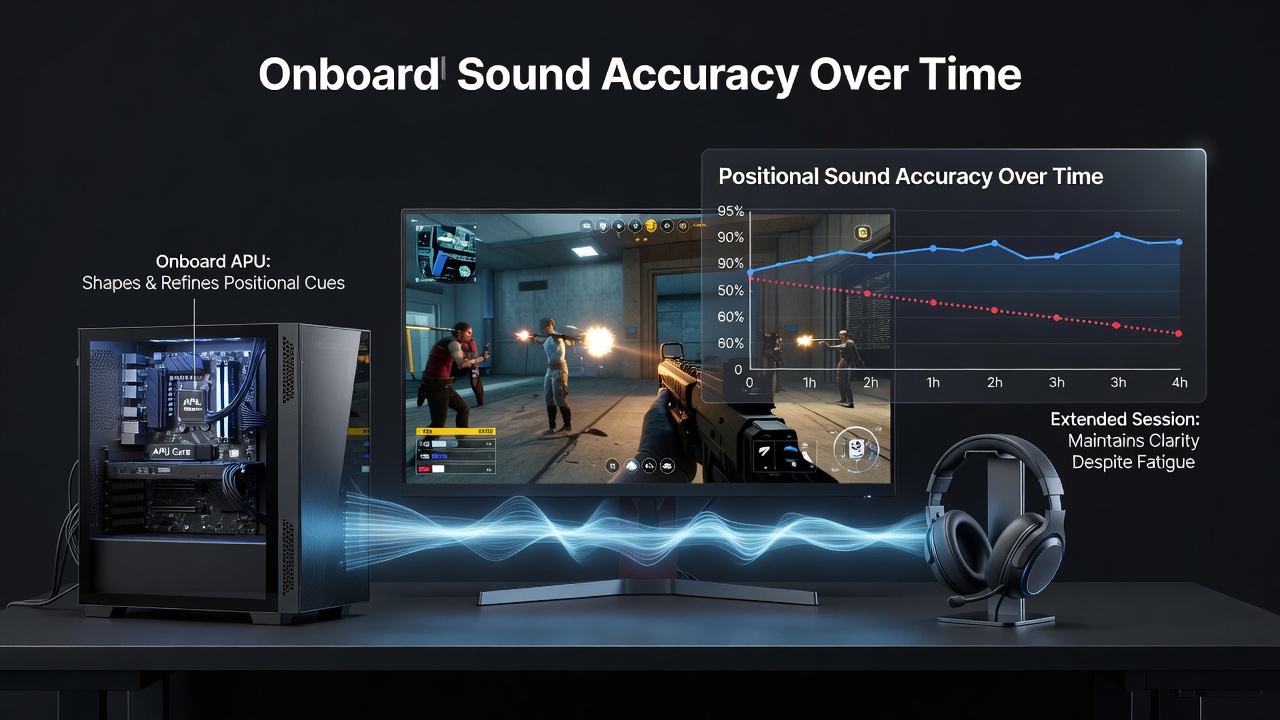
Compact desktop builds continue to present specific engineering challenges for audio hardware, particularly when onboard audio processing units must maintain positional sound accuracy over long multiplayer sessions. These integrated components, which combine digital signal processors with codecs on motherboards, handle tasks such as head-related transfer function calculations and spatial audio rendering without dedicated sound cards. Data from component testing indicates that space constraints in small form factor chassis often lead to closer proximity between audio circuits and heat-generating elements like GPUs and VRMs.
Signal Processing Mechanics in Integrated Audio Systems
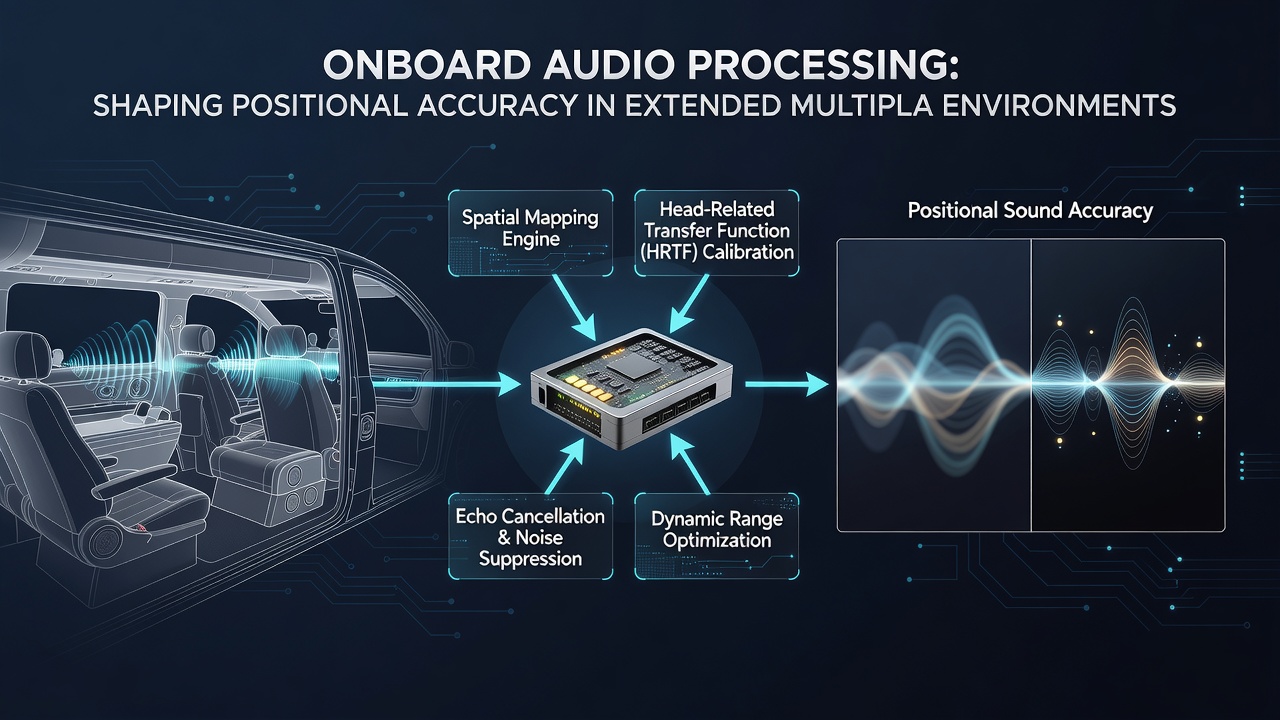
Onboard audio processing units apply algorithms to convert stereo or multichannel inputs into directional cues that players rely on for locating opponents in competitive environments. Manufacturers integrate DSP cores capable of real-time convolution for virtual surround effects, yet thermal throttling can occur when exhaust paths remain limited. Research conducted at technical institutes in Canada has documented how elevated temperatures above 65 degrees Celsius alter clock stability in these processors, resulting in measurable jitter that affects timing precision during audio playback.
Power delivery networks also influence performance because shared voltage rails between the audio section and other subsystems introduce noise under load. Compact builds frequently route traces near high-speed data lines, increasing susceptibility to electromagnetic interference that distorts phase relationships essential for accurate sound positioning.
Performance Patterns Observed in Extended Play
Multiplayer sessions lasting several hours place sustained demands on audio subsystems, where consistency in positional rendering becomes critical. Observers note that latency accumulation in onboard DSP buffers tends to rise gradually as session duration increases, particularly when system memory remains under pressure from simultaneous game processes. Figures from hardware monitoring utilities reveal that buffer underruns become more frequent after the two-hour mark in systems lacking dedicated audio power isolation.
European testing facilities reported in 2025 that positional error rates, measured through standardized azimuth deviation tests, climbed by an average of 12 percent between initial and final hours of continuous operation in micro-ATX enclosures. These shifts correlate with rising case ambient temperatures rather than software configuration alone. July 2026 benchmarks from multiple vendors show incremental firmware updates addressing some of these drift patterns through adaptive sample rate adjustments, although complete mitigation requires chassis modifications that exceed standard compact dimensions.
Design Variables Affecting Accuracy
Component placement on the motherboard determines how effectively audio processing units maintain signal integrity amid heat and vibration. Boards that position the audio codec farther from primary heat sources demonstrate lower variance in frequency response across extended runs, according to comparative analysis by industry groups. Shielding techniques, including additional ground planes around audio traces, reduce crosstalk from adjacent PCIe lanes that carry high-bandwidth traffic during intense gameplay sequences.
Users operating systems with unified memory architectures encounter different constraints because audio buffers compete directly for bandwidth with rendering tasks. This competition produces occasional phase shifts that players perceive as directional uncertainty when identifying footsteps or weapon sounds at distance. Academic papers from Australian universities have quantified these effects through controlled listening trials, confirming that positional discrimination scores decline measurably once internal temperatures exceed manufacturer-specified operating ranges for the audio silicon.
Measurement Approaches and Industry Data
Standardized testing protocols now incorporate prolonged session simulations to evaluate audio subsystem endurance. Metrics include azimuth accuracy, elevation detection, and response consistency under thermal load. Trade associations tracking component reliability note that compact builds represent an increasing share of submissions for such evaluations, reflecting broader adoption of small form factor platforms. Manufacturers respond with revised layouts that separate audio domains more effectively, though complete separation remains difficult within volume limits under 20 liters.
Conclusion
Evidence from multiple testing programs establishes clear connections between onboard audio processing unit behavior and positional sound accuracy in constrained desktop environments. Thermal management, power distribution, and trace routing each contribute measurable factors that accumulate over extended multiplayer sessions. Continued refinement of firmware and board layout practices offers pathways for improvement while hardware remains integrated rather than discrete.