Analyzing Substrate Material Choices on PCB Warpage in Compact Mini-ITX Gaming Builds Under Thermal Cycling
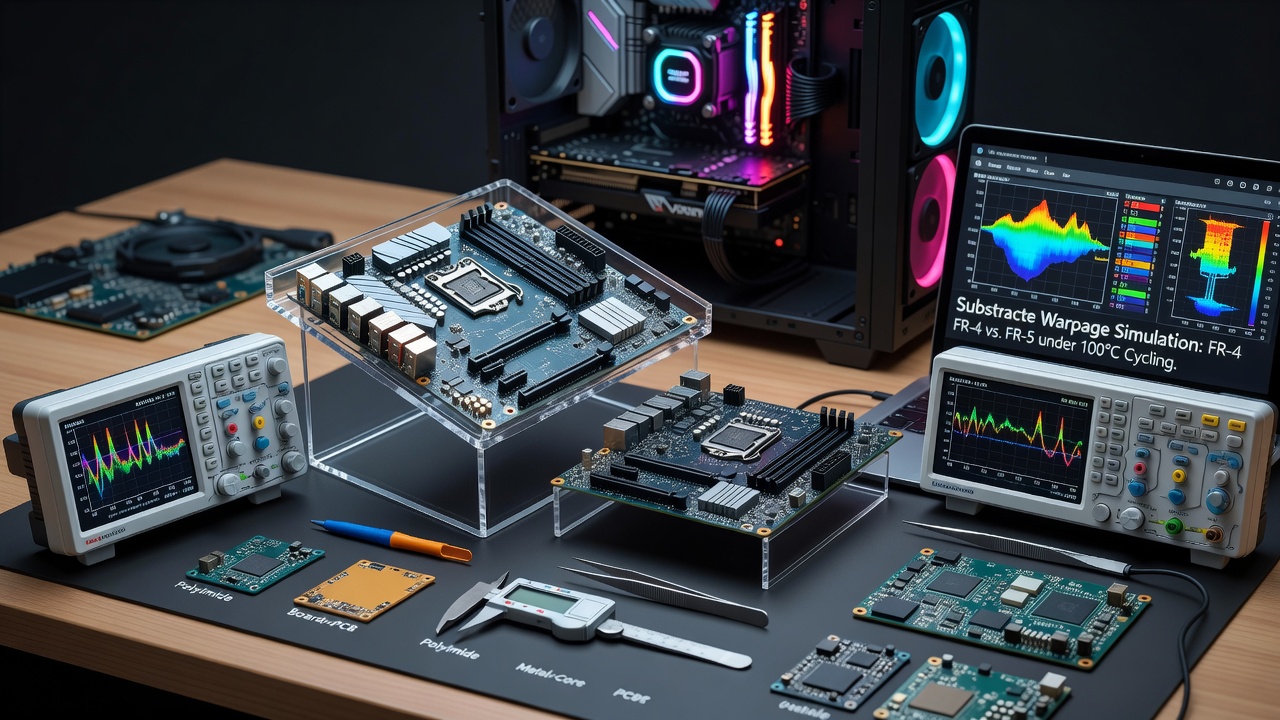
Compact mini-ITX gaming systems pack high-performance components into small chassis where repeated thermal cycling from CPU and GPU loads creates significant stress on printed circuit boards, and substrate material selection directly influences how much warpage develops over time. Researchers track coefficient of thermal expansion values across different base materials because mismatches between copper traces and the substrate generate internal forces that bend boards during heating and cooling phases. Data from multiple hardware testing facilities shows that standard FR-4 epoxy glass laminates exhibit higher warpage rates compared to specialized low-CTE alternatives when exposed to cycles between 25°C and 85°C over hundreds of iterations.
Substrate Material Properties and Their Thermal Behaviors
FR-4 remains the most common substrate in mini-ITX motherboards because of its cost-effectiveness and adequate electrical insulation yet its glass transition temperature around 130-140°C limits performance when gaming workloads push localized areas beyond that threshold. Engineers observe that polyimide-based substrates maintain dimensional stability better under the same conditions since their higher glass transition points exceed 250°C and their lower coefficients of thermal expansion reduce stress accumulation at copper interfaces. Ceramic-filled composites offer another option where manufacturers blend silica or alumina particles into epoxy resins to bring CTE values closer to copper's 17 ppm/°C range, and testing in July 2026 confirmed these formulations cut average warpage by measurable margins in boards subjected to 500 thermal cycles.
Those studying material interactions note that halogen-free variants of FR-4 sometimes introduce slight increases in moisture absorption which then accelerates warpage when boards undergo rapid temperature swings during intense gaming sessions. Manufacturers adjust filler content and weave styles in fiberglass reinforcements to fine-tune mechanical properties, and industry reports highlight how these modifications affect long-term reliability in space-constrained builds where airflow patterns leave certain board zones more exposed to heat spikes.
Thermal Cycling Impacts in Mini-ITX Configurations
Thermal cycling in mini-ITX gaming PCs occurs frequently because compact cases restrict airflow and force components to operate near thermal limits during extended play, causing PCBs to expand and contract repeatedly. Observers record that warpage concentrates near high-power areas such as voltage regulator modules and chipset locations where heat density remains highest, and this distortion can shift socket alignments or strain solder joints over months of use. Studies conducted at research institutions across different regions reveal that boards using standard substrates develop measurable bow and twist exceeding 0.5% of diagonal length after 300 cycles, whereas low-CTE materials stay within tighter tolerances that preserve component seating accuracy.
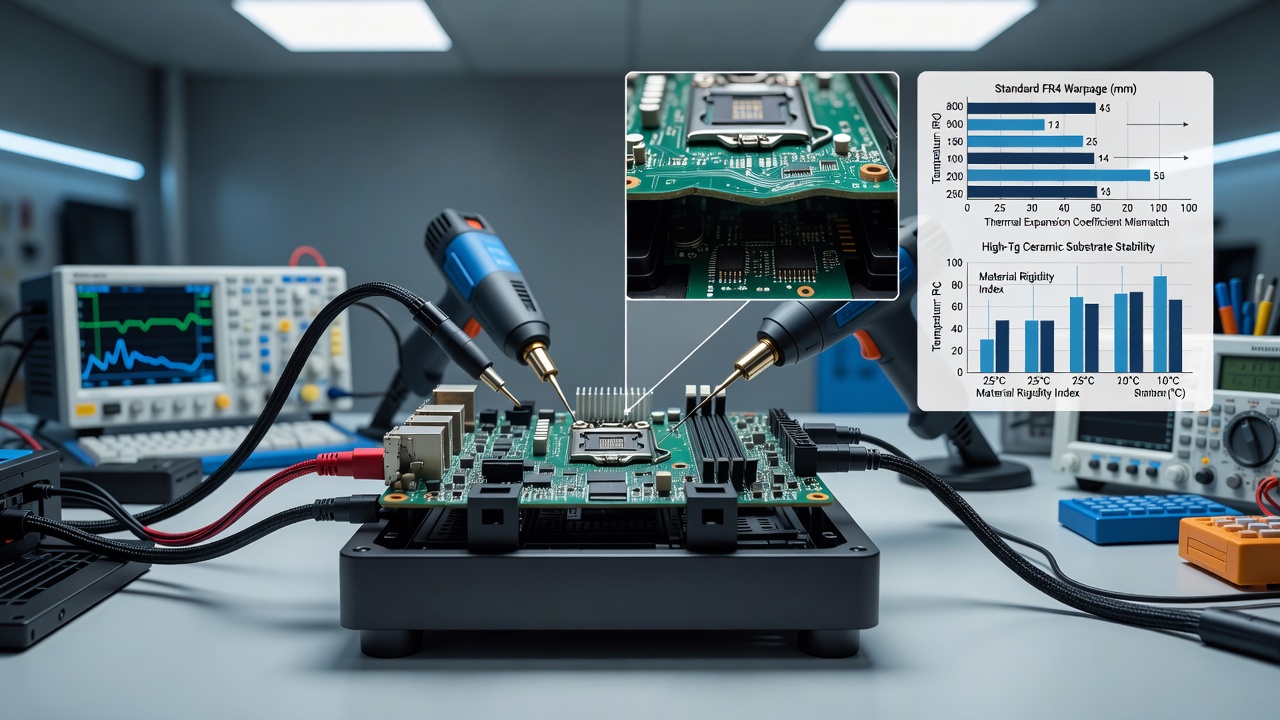
Simulation software helps predict these outcomes by modeling stress distribution across layered structures, and validation tests confirm that accurate material property inputs lead to reliable forecasts of deformation patterns. Gaming hardware analysts note that even small warpage amounts matter in mini-ITX designs because tight clearances between the board and case panels leave little room for bending without contact or interference issues. Data collected from accelerated life testing facilities indicates that cycles mimicking daily gaming routines accelerate warpage progression in higher-CTE substrates while slower rates appear in reinforced alternatives.
Practical Considerations for Build Compatibility
System integrators evaluate substrate options alongside other factors such as signal integrity requirements and manufacturing yields when specifying mini-ITX boards for gaming use. Trace routing density increases in these compact layouts, which adds complexity because warpage can affect impedance control and high-speed signal paths between CPU, GPU, and memory interfaces. Findings from collaborative projects between North American and European electronics research groups show that substrate selection influences both initial board flatness and its retention after thermal exposure, with implications for assembly processes like surface-mount component placement.
Standards organizations including the IPC provide guidelines on acceptable warpage limits for different board sizes, and these specifications guide material choices in gaming hardware production. Meanwhile, reports from the Australian research sector emphasize testing protocols that replicate real-world cycling conditions found in densely packed systems. Builders often cross-reference these guidelines when selecting motherboards for custom mini-ITX gaming rigs where sustained loads create repeated expansion cycles.
Conclusion
Substrate material decisions shape how mini-ITX gaming PCBs respond to thermal cycling, with measurable differences in warpage emerging between conventional FR-4 options and advanced low-CTE alternatives after repeated temperature fluctuations. Testing data gathered through 2026 continues to refine understanding of these interactions, supporting informed choices during hardware development and system assembly. Continued monitoring of material performance under realistic gaming conditions provides ongoing insights into maintaining structural integrity within compact builds.