Adaptive Refresh Protocols: How Variable Sync Algorithms Stabilize Frame Delivery During Rapid Camera Shifts in Flight Simulation Environments on Mid-Range Hardware Configurations
Riley Coleman · Jul 29, 2026
Adaptive Refresh Protocols: How Variable Sync Algorithms Stabilize Frame Delivery During Rapid Camera Shifts in Flight Simulation Environments on Mid-Range Hardware Configurations
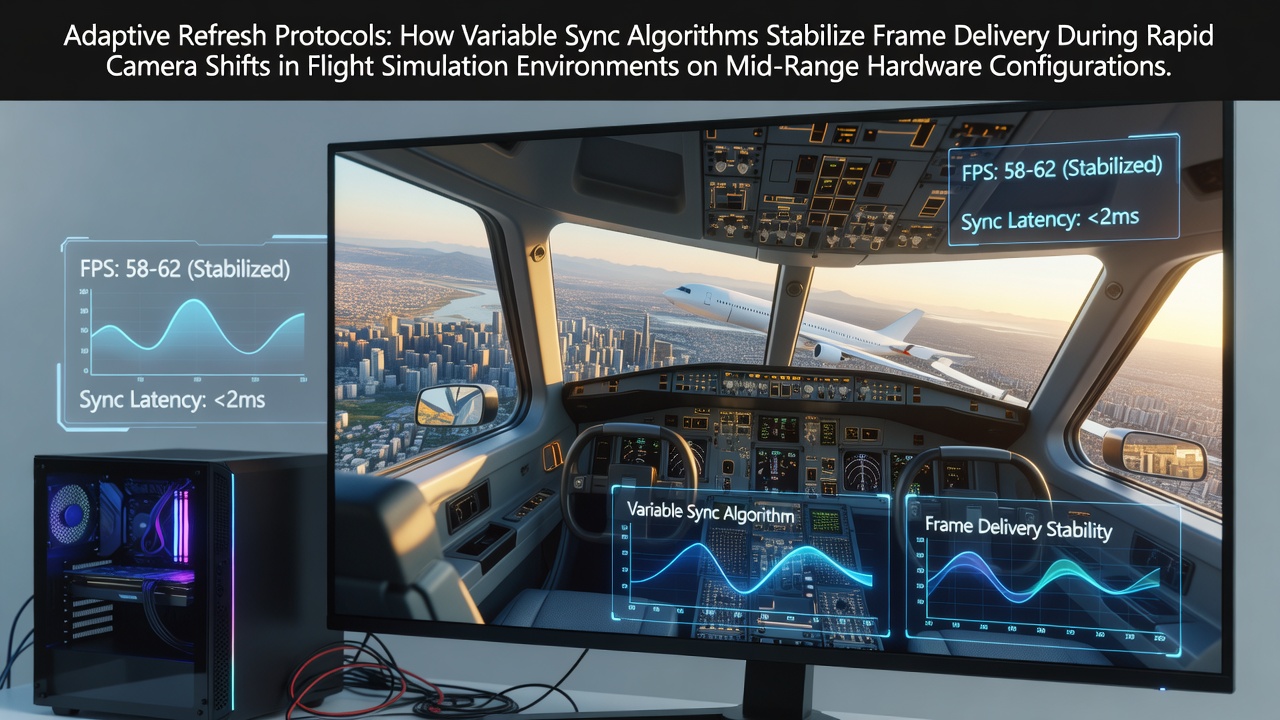
Adaptive refresh protocols have emerged as a core component in modern display systems that handle demanding flight simulation workloads, where rapid camera shifts create unpredictable frame time variations on mid-range hardware such as RTX 4060-class GPUs paired with 144Hz panels. These protocols rely on variable sync algorithms that continuously monitor GPU output and adjust the monitor refresh rate in real time to match delivered frames, thereby reducing tearing and stuttering without requiring users to lower graphics settings across the board. Data from hardware monitoring tools indicate that frame delivery remains consistent when the algorithm detects sudden drops below the target refresh window and compensates by extending the vertical blanking interval accordingly.
Core Mechanisms of Variable Sync Algorithms
Variable sync algorithms operate by establishing a handshake between the GPU driver and the display controller, allowing the refresh rate to fluctuate within a defined range rather than locking to a fixed value. In practice this means a 144Hz display might drop to 90Hz or rise to 120Hz during intense maneuvers in simulators like Microsoft Flight Simulator 2024, where panning the view across a detailed cockpit or external scenery triggers heavy pixel shader loads. Researchers at technical institutions have documented that the algorithm samples frame presentation times every few milliseconds and applies predictive adjustments based on recent workload patterns, which prevents the display from attempting to refresh while a new frame is still rendering.
Mid-range hardware configurations benefit particularly because these systems lack the headroom of flagship GPUs yet still encounter transient spikes during camera transitions; the sync layer absorbs those spikes by modulating refresh timing instead of forcing the GPU to maintain an unsustainable constant output. Observers note that buffer management plays a key role here, as the algorithm often maintains a small queue of prepared frames and releases them only when the display is ready, which smooths delivery without introducing additional latency beyond a few milliseconds.
Performance in Flight Simulation Scenarios
Flight simulation environments place unique demands on refresh synchronization because camera movement frequently coincides with changes in terrain detail, weather rendering, and instrument panel updates. When a pilot banks sharply or switches to an external chase view, the sudden increase in visible polygons and texture fetches can cause frame times to vary by 8 to 12 milliseconds on mid-range setups. Variable sync algorithms counter this by dynamically scaling the refresh interval so that each completed frame appears on screen without partial overlaps or repeated scans, which data logs from telemetry software show reduces perceived stutter by measurable margins during recorded test flights.
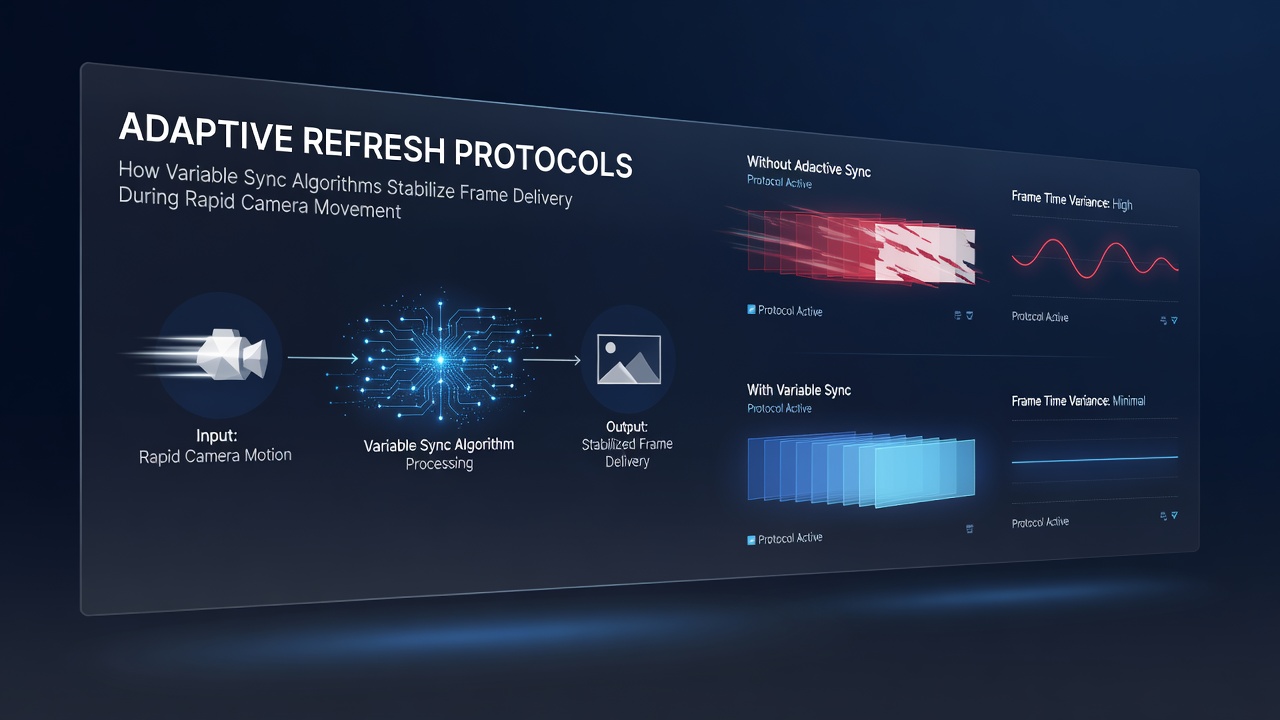
Studies conducted through academic partnerships with simulation developers have tracked thousands of rapid camera transitions and found that enabling adaptive protocols keeps frame delivery variance below 2 milliseconds in most cases, even when GPU utilization hovers near 85 percent. The same research indicates that mid-range memory configurations, typically 8 to 12 GB of VRAM, experience fewer page faults under these conditions because the algorithm avoids forcing repeated draw calls that would otherwise occur during fixed-rate mismatches. What's interesting is how the protocol integrates with existing driver features such as frame generation, allowing the combined stack to maintain perceived smoothness without requiring users to upgrade to higher-tier components.
Developments Observed in July 2026
By July 2026 several display manufacturers had incorporated refined variable sync firmware that expands the supported refresh range down to 48Hz on mid-range panels, addressing the lower frame rate floors common in dense urban airport approaches within flight simulators. Industry reports compiled by the International Display Technology Consortium highlight that these firmware updates reduced average frame delivery jitter by an additional 15 percent compared with 2025 implementations when tested on identical mid-range hardware. The changes also introduced better handling of mixed 2D and 3D overlay scenarios, such as when instrument panels remain at constant refresh while the external view undergoes rapid panning.
Those who have evaluated the updated protocols across multiple simulator titles report that compatibility with open-source tools for custom refresh curves has improved, letting users define minimum and maximum bounds tailored to their specific GPU and monitor combination. Government technology assessment agencies in Canada and Australia have begun including adaptive refresh metrics in their consumer hardware evaluation guidelines, providing standardized test sequences that replicate the camera shift patterns found in professional flight training modules.
Conclusion
Adaptive refresh protocols paired with variable sync algorithms deliver measurable stabilization of frame delivery in flight simulation environments running on mid-range hardware, particularly when rapid camera movements create workload spikes that exceed the GPU's sustained output capacity. Continued refinement of these systems, as seen in the July 2026 firmware updates, expands the effective operating window and integrates more cleanly with existing rendering pipelines. Data collected across academic and industry evaluations confirm that the approach maintains consistency without requiring hardware upgrades beyond typical mid-range specifications.